Showing posts with label Review. Show all posts

16 April 2026

Review: The Housemaid is Watching

The Housemaid is Watching The Housemaid is Watching by Freida McFadden
My rating: 4 of 5 stars

Quite a difference pacing and time skip from the other two books of the trilogy. Millie is now a proper housewife and mother of two and the threat level of the book did went down. I feel the author have improved her prose from the first book, especially in the first half of the book. It seems more polished and finished now. To me, The Housemaid's Secret was bit of a letter down from the first one, but this book surpasses both of them. Middle book syndrome in action, perhaps.

lso, the book can be read without reading the earlier books as a standalone. While it is indeed the same formaltic thriller as the first two, Millie while being the first person narrator for almost 80% of the book is not really a doer. In style and structure the book is closer to the orginal book.

View all my reviews

09 April 2026

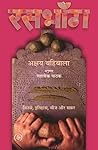
Review: Ras Bhang

Ras BhangRas Bhang by Akshaya Bahibala
My rating: 2 of 5 stars


ये किताब बहुत कुछ करना चाहती है, लेकिन अंततः असफल रहती है। आत्मकथा, यात्रावृत, सामाजिक चित्रण एवम् ऐतिहासिक-चिकित्सीय-वैधानिक लेख, सब कुछ समेटने का प्रयास है। इसमें मेरी माने तो केवल पहला ही हिस्सा रोचक था। शोध उतना कुछ खास नहीं है। पढ़ने के बाद ये भी प्रतीत होता है की लेखक उड़िया होने के बावजूद भी काफ़ी हद तक स्थानीय प्रथाओं स्थानीय परंपराओं को एक बाहरी दृष्टि से देखता है। मैंने सोचा था ये मूल रूप से उड़िया में लिखी किताब का अनुवाद है। लेकिन असल में Bhang Journeys: Stories, Histories, Trips and Travels मूल किताब है जिसका अनुवाद Vyalok
ने किया है। भाषा बहुत सहज है और मालूम नहीं होता कि इसका अनुवाद अंग्रेज़ी से हुआ है । Abhishek Shukla की Deep Work और M.L. Parihar की Jaat-Paant Ka Vinash (जात-पांत का विनाश) दोनों में साफ़ पता चलता है, पर यहाँ ऐसा नहीं है। यद्यपि किताब उतनी खास नहीं है, फिर भी आधुनिक हिंदी अनुवाद के एक नमूने के तौर पर इसके लिए विशेष स्थान है।


View all my reviews

22 March 2026

Fifteen Minutes from China Gate: Colonial Memory and Cold War Mythmaking

 This motion picture is dedicated to France. More than 300 years ago, French missionaries were sent to Indochina to teach love of God and love of fellow man. Gradually, French influence took shape in the Vietnamese land. Despite many hardships, they advanced their way of living, and the thriving nation became the rice bowl of Asia. Vast riches were developed under French guidance until 1941, when Japanese troops moved in and made the rice bowl red with the blood of the defenders. In 1945, when the Japanese surrender was announced, a Moscow-trained Indo-Chinese revolutionist who called himself Ho Chi Minh began the drive to make his own country another target for Chinese Communists. Headquartered in the North, he called the new party Viet Minh. With the end of the Korean War, France was left alone to hold the hottest front in the world and became the barrier between communism and the rape of Asia. Members of the Foreign Legion imported from North Africa fought valiantly under the French flag, but the ammunition pipeline from Moscow could not be found. Bombs and shells made in Russia were stocked in secret tunnels along the mountain range of the China Gate. This arsenal was winning the war for the Communists.

These are the opening lines of the narrator in China Gate (1957). This is not an ironic suffering from white man syndrome narrator, but an actual dedication of the film. Truth be told, I had no intention of watching western pro imperial cold war propaganda a day before my NBHM interview (and in case I only watched the first 15 minutes, for DD keeps scolding me to go back to studying for the interview, she is out on lunch when I am typing it), I was trying to watch the Bollywood China Gate (1998)but me being me made an mistake and this happened. Not the first time I made such a mistake, it happened before with The Flight of the Emperor. 

Whatever the circumstances, the black and white film has declared the White colonists to be perfectly white in their actions in Viet Nam. It was perhaps not enough, the director Samuel Fuller writes in his book, which WP paraphrases as: 


Before China Gate was to be released, Fuller received a call from Romain Gary, the French Consul-General in Los Angeles, inviting him to lunch. Gary said the film's prologue was too harsh towards France and asked Fuller to change it. Fuller refused, but the two became firm friends with similar interests. The film was never released in France. 

Even this level of praising France for allegedly advancing the locals' "way of living " is seen as too harsh. I don't know how to make it seem better to colonial sympathisers, but they did think it had to be. This is the level of propaganda in the 'first world' just a few decades before, and people will call Dhurandhar 2 as propaganda. 

In the little I watched, one thing is clear, the filmmakers are not racists. In fact, academic consensus seems to be these types of war films actually were pioneers in racial unity by pitting Americans as a whole against 'the enemy' or 'the Reds'. In fact, a paper goes on to say:

One thing that did adhere to Fuller’s career in its entirety was a persistent interest in race and racism in the US. Issues of racism against Asians, Asian-Americans and African Americans are brought to the fore in films like The Steel Helmet, China Gate, The Crimson Kimono, Shock Corridor and White Dog, not to mention his script for The Klansman (1974); against Native Americans in Run of the Arrow; and against Jews in the invocations of the Holocaust in Verboten! and The Big Red One.

Still, I found one of the opening scenes to be a bit problematic.  The narrator notes the lack of food in a southern hamlet isolated by the freedom fighters of the Viet Cong. All animals are being eaten up, save for a puppy named Pierre, hidden by a boy we later learn is a main character. 


A man finds the puppy sticking out from the child's clothes and chases him with a knife with hunger in his eyes. Whether it was an attack on dog meat consumption of the Vietnamese people or just a way to show the extent of hunger that an animal so dear to American sensibilities can be eaten is not clear. But I will have to lean towards the latter now that I have read the academic consensus. It will make sense, as The Making of Global International Relations: Origins and Evolution of IR at its Centenary notes that WW2 was just a victory against so-called scientific racism. Another example, 'his only cross to bear is that of eyes' referring to a part Asian child, is maybe just dated language rather than racism, when the film actually does challenge the discrimination against asian americans, as a review notes about the mother of the child:

Lucky Legs occupies the center of Fuller’s preposterous sex fantasy / melodramatic tangle. She has a son by (who else) Sgt. Brock, the ex-husband who abandoned her the moment he saw his child’s Chinese features. Brock is not bothered that Lucky Legs (this is really buried in context) is a prostitute and party girl — but gets freaked out by the thought of having a bi-racial child.

Clearly at attack on the still persisting double game of American morality. Anyway, writing more would not be fair game at this stage, and I will return and complete the review later after finishing.

13 February 2026

Review: ख़ामोश! अदालत जारी है

ख़ामोश! अदालत जारी है [Khamosh! Adalat Jari Hai] ख़ामोश! अदालत जारी है [Khamosh! Adalat Jari Hai] by Vijay Tendulkar
My rating: 1 of 5 stars


View all my reviews ख़ामोश! अदालत जारी है [Khamosh! Adalat Jari Hai]ख़ामोश! अदालत जारी है [Khamosh! Adalat Jari Hai] by Vijay Tendulkar
My rating: 1 of 5 stars

पहली बार इस नाटक का नाम मैंने गिरीश कर्नाड की Collected Plays: Tughlaq, Hayavadana, Bali: The Sacrifice, Naga-Mandala, Volume 1 में देखा था। दोनो हो नाटककार समकालीन थे, दोनों ने ही भारतीय नाटकों में नए नए प्रयोग लाए थे, और दोनों का तुलनातमक विश्लेषण करना एक तरह का फ़ैशन मालूम पड़ता है। दोनो ने ही अलग भाषाओं में नाटक लिखा था जिसका मैने अनुवाद ही ग्रहण किया।

मेरे मत में समानताएँ यहीं तक सीमित हैं। कर्नाड की रचनाएँ एक परंपरा से जुड़ी प्रतीत होती हैं, जो यक्षगान आदि से उनके काम को जोड़ती है; जबकि, तेंदुलकर का यह नाटक एक जर्मन उपन्यास Traps का ही मराठी रूपांतरण है। ये बात नहीं कि देशकालीकरण मुझे स्वीकार नहीं, Three Men (not) in a Boat: and most of the time without a dog एक अच्छी कोशिश थी Three Men in a Boat के जादू को फिर से दोहराने की, लेकिन ये अच्छे से नहीं किया गया इस बार।

अब शायद इसका कारण गर्भांक और अतिनाटकीयता रहा हो जो इसे अत्यधिक बोझिल के दे रहा है, या पात्रों का वार्तालाप अत्यधिक, किसी अधिक उपयुक्त शब्द के अभाव में कहूँ तो,‘ड्रामैटिक’ लगा हो। वैसे भी, यह माध्यम की एक स्वाभाविक सीमा हैये दिक्कत तो वैसे था माध्यम की ही है, ज्यादा होता नहीं कि नाटक पढ़ के मन में अच्छा लगता है। शायद कर्नाड का Shadi Ka Albam पढ़नी चाहिए आगे जब अनुधिक भारतीय नाटक पढ़ने का मन हो।

View all my reviews

29 January 2026

मत पढ़ो Nooh के बारे में


Don’t Play With Nooh अंग्रेज़ी शीर्षक वाली एक करीब करीब हिन्दी में लिखी गई कहानी है। लेखक (जो अज्ञात है कितनू प्रतिलिप्याधिकार एक असाद के पास है, अब जिसे जो सोचना है सोचे) के अनुसार वो ना तो हिंदी में निपुण है ना ही अंग्रेजी में, इसलिए ये ' हिंदुस्तानी' में लिखा जा रहा है। अगर हिन्दी उर्दू के बाद अंग्रेज़ी भी मिला दी जाए तो ज़रूर हिन्दुस्तानी है ये, लेकिन शायद हिंग्लिश कहना ज्यादा उपयुक्त होगा। एक बार विश्वविद्यालयों की आधुनिक पंचमेल खिचड़ी का ज़िक्र किया था, वो ही बोली है इसमें। कहानी AMU की है, छाप तो है लेखन में। छपा हुआ देख कर ही महसूस होता है कि हमारी हिन्दी को कितना अटपटा कर दिया है अंग्रेज़ी ने। Cat तक हमे रोमनलिपि में अंग्रेज़ी में लिखना हो रहा है। लेकिन अच्छा या खराब, आज ये युवाओं की बोली में ही ये किताब है।

Notion Press से प्रकाशित है और स्वप्रकाशन की झलक साफ दिखती है त्रुटियों में । चन्द्रबिन्दु नहीं है कहीं भी, माना कि लोकाचार में पंचमाक्षर, अनुस्वार और अनुनासिक के उच्चारण में भिन्नता का लोप हो गया है (संभवतः आदिशंकराचार्य के भज गोविन्द के प्रभाव से), कहीं पे अर्धचंद्रबिंदु लिखा गया है और कहीं तो कुछ नहीं (अदर्शनं लोपः)। शकार के स्थान में षकार का प्रयोग है। जब पहेली पहेली बार विंडोज़ में देवनागरी लिखता था तो ऐसा ही होता था। आजकल तो आईआईटी कानपुर के WX notation से लिखता हूं। आखिर वैज्ञानिक बुद्धि ही काम आई। एक तरह से ये सारी त्रुटियां हिंदी भाषा के क्षय जिसका वर्णन ऊपर किया उसपे ही एक तरह की अनजाने में नाटकीय विडंबना है। बहुत इधर उधर मुंह मारने के बाद ये चुना है। और मोबाइल में तो गूगल कीबोर्ड सही है देवनागरी के लिए।

खैर महज़ भाषा से ही दिक्कत न थी मेरी, अन्यथा 10 पृष्ठ पढ़ के न छोड़ता किताब। खैर गम नहीं, सिर्फ 30 32 की किताब मिल गई थी ये मुझे। 

गुमनाम लेखक (जो शायद असाद हो सकता है) की ये आपबीती कहानी है। वो वाचक भी है और एक पत्र भी। दोनों में भी काफी irritating सा महसूस होता है। बकौल स्नेप के "Insufferable know-it-all"। 

ये किताब भी अभी तक है नहीं GR में, हालांकि की बाईआल की कविता संग्रह पे जो इधर लिखा था अब उसका एक अंश GR में डाल दिया है। जब तक नहीं आ जाता ये भी उधर, तब तक ये ही सही। 

1/5 सितारे 


15 January 2026

To Katabasis with Love


Katabasis by RF Kaung


I have been trying to get into fantasy for some time. There have been some recent hits like the Vampire-Dentist book but as soon as the book starts to take itself much seriously things start to fall apart for me. Fantasy and seriousness don't really gel well for me. Or at least such I thought before picking up Katabasis by RF Kaung. 

I am early up the book but it still resonates. Apparently this is a dark academia book too. I don't know much about the genre but the protagonist Alice Law is a PhD student and I can relate to her much. 

I liked how they treat Magic as some sort of academic discipline which is studied, have different schools and researched at a PhD level. One person described the magic system as "chewy" and it somehow makes sense to even an outsider to the genre like me. They cross check references, pit the canon text against each other and what not. Sometimes the paper is in a language they can't understand or it might simply be unavailable to look at. How much all this reminds me of my still unfinished quest to find the proof of Hall's Lemma

A lot of works and maths refrences in the book are real. I must go on and read 'What the Tortoise Said to Achilles' for the book used an argument apparently in that text and it got me intrested. The book also mentions something about Ramanujan-Casimir effect, which sounds to make up but is apparently a real thing. Here is a better article about the effect, it sounds interesting but still I will be passing up for we are mathematics and the physical things don't concern us. That and a severe lack of prerequisites. Our protagonist Alice may not like me though, for after some discussion about the geometry of space for a couple of pages: 

"Oh, stop it." As always, mathematics induced in Alice the urge to weep. "What's the point?" 

But unlike Verne's All Around the Moon the geometry does matter here. It matters in Hell but not in space! Indeed, if geometry matters there, then 'To Hell with Love'.


14 January 2026

The Zoo and the Empire: On Soul in a Shell

I received an ARC for Soul in a Shell by Dylan Byall (linktree link provided at the back of the book itself) and am writing this post as an honest review. The book is not yet on GR and I am too fed up of GR librarians and the slow process to change stuff there that I will not make a request to add this. If and when that happens I will post a shorter review on GR too. Keeping up with the tradition, this post will not be linked there. 

Now to the book. It's mostly a poetry collection with some prose sprinkled here and there. It was published in September 2025. The author mentions being a fan of Gertrude Stein, John Steinbeck, Fitzgerald and Hemingway from his teenage years. Except for the last I can't claim to be familiar with his literally lineage in the sense of reading their works. But the author characterizes their style as observational and a voice of the subaltern. The author well managed to try score of those axes. The author is a US Navy man posted for much time in Japan and the writing of the book began during the Corona Pandemic.


The author manages to integrate well the black redactions in this poems. An extreme example is this:


I don't know if the technique is used much or the author is a pioneer but it seems to work a lot of times. They seem to capture the current trend of blacking out information well, something even the US government is recently much criticized in relation to Epstein Files. Or closer home, the secrecy surrounding the recent failures of ISRO. The author has even experimented with use of emojis alongside redacted text on the poem titled "I look at my phone and the world, spinning like a bullet, slows". This captures the reality of modern day social media very well with the trolling, censorship, power moding and low level discourse. Redaction technique works well in the poem entitled "Catch-22" too which links censorship of soldiers letters (my mind immediately goes to Feynman messing with the censors) during WW2 to current day censorship by an agency whose name itself is redacted showing that the book is not beyond the laws of the era. The author also tries visual poetry like in "The Wax Candle/ Its Source Code" and many other titles but I don't really like it. But even I don't even get Chitrakavya so maybe it's just me. My edition of छन्दः सूत्रम्: had some of them by the commentator (who was an Arya Samaji and managed to let that influence his commentry) at the end, but they were never explained. And I never tried much on my own too.

The author's naval career anchors a huge part of the book. Beginning from the very description of his recruiter in "The man had many masks", to dates of finalizing of his papers, him leaving the house (July 25, 2017 by the way). He doesn't view it in a favourable way. It seems to be a traumatic experience for him. He compares the soldiers to Zoo animals, in "Zoo" he writes:

Now, I feel like I am part of
Uncle Sam's private collection,
And he's suicidal.

He's just freed me into a new world,
where I'm authorized to be shot on sight
or shipped off
to another zoo.

This was in context of Zanesville Massacre, when a person committed suicide after releasing 56 animals, including apex predators like lions and tigers, loose. I don't usually like these sort of anti heroic view of the armed forces. I am very much a सर कटा सकते, मगर झुका सकते नहीं person. But Joe Abercrombie seems to make it work in Before they are Hanged. And Byall also comes very close here. I think my view on the post world war bases imposed by Americans on Japan also helps. This poem is followed by a prose writing entitled "The Fukuoka Supreme Store & The Fall of Rome". The author writes it towards the end of his service in Japan. He writes that 

Some people see the U.S. as a dignitary trying to pay leader. But in 2023, I imagined it as Maximus Aurelius entering the Colosseum, wounded beneath it's armour. Even though it knew the wound was there, it knew it had to fight. And even though it might collapse on the world stage, it would still step into the arena  — because that's what empires do.

Standing in the Supreme Store, I felt the pulse of something decaying beneath the surface, something true, hidden under the brand's glossy sheen. Maybe that's what made it Supreme, made America supreme. Maybe that's what makes us all.
Something waiting to fight, even when it could already be lost.

Much tragic realism isn't it? The author was a aboard USS Ronald Reagan (he later mentions that some of the poem were actually written during that stint). The motto of the supercarrier (and its a mighty super one at that, which can house the entire fixed wing inventory of Indian Navy aviation arm at the same time) is "Peace Through Strength" which I thought was a Trumpism but while writing this post I learnt otherwise. From this mighty ship, the author circles back to the "Zoo" theme in the poem "Ghost Stories":

as if the gory could outweigh 
the cost of the crown.

At multiple other places the author returns to similar themes. In "Tom and Jerry" he says:

America likes to think itself 
the best of both.

The big cat with the small mouse' mind.
We'll make anything out prey.


His Majesty King Charles III

The next poem to catch my eye was "Portrait in Red". It is about the portrait His Majesty King Charles III. The poet notes that the painting captures realism, his age and such. Much a far cry from when every Tom, Dick and Harry could have crowned themselves the Lord of Totality of Fourier Corners. I think it further evaluates the need or Monarchs in today's day and age. Only today can we except to open newspaper and see pre adolescents second in line to the British throne use that as a brag in their school to gain clout. The King is dead, long the Republic when? Sadly nothing came out of Elizabeth's death. Even India declared a day of National mourning over it! As I write the son of deposed Shah of Iran tried to topple the Islamic Republic to sit on the throne. The author writes:

In these times
they say a social contract 
feels like a deal with Devil.
But I know every deal breeds a devil of its own.

There is a sister poem "Portrait in Blue". A few others have similar sister poems or continuation.

The author was posted in Japan, specifically Yokusuka base. He writes "On High Alert (2021 to 2025)"  to show that it was not an Eastern holiday posting. He took was on high alert during entirety of his deployment. 

"This is the geopolitical hotspot of the world," 
they drill into our heads at sea 
so we remain on high alert.

Machoism of the falling wounded gladiator? 

The poem "United States" touches both the declining empire as well as man as slave of machine themes that form the bulk of the collection. I especially like the ending stanza:

The iPhone,
stuck to my hand,
charging off me,
types:

Sent from my Human.

This does sends a chill. Does send a chill.

I think the poems that focused on these two theames were the most memorable. There were many others too, but they didn't call my attention that much. Truth be told I forgot about the book midway due to all the mess around the New Year and was only recently reminded of it my a reminder e-mail from the ARC agency. 

But the beauty of poetry is that it can sometimes be given a completely different meaning depending on the listener. The extreme example is, of course, Magha' Sishupal Vadh's 16th Canto. But I had a similar (but unintentional on part of the author) moment while reading "Even in War Zones". The entire poem is:

Even in war zones

the lotus dares bloom
in murky, oil- slick ponds
plunked with bullet shells.

To me this is just dedicated to victory of BJP MLA Shagun whose father were uncle were killed by Kashmiri terrorists.

Length of this poem is similar to a lot others in the collection. However some poems span 3 pages too. Overall the lengths are very mixed. The style is mostly free verse, but a few have some sort of well rhyme scheme, especially in the second part called "Ctrl". This I think is a conscious choice.


There seems to be only one other public review at the time of writing, which is by Dr Dudas on Reedsy. He calls it a 'Must Read' but I will be much held back in my praise. The author mentions that he has already started work on its sequel "Ad Disastra" but it won't be an automatic TBR for me. Perhaps my tastes in poetry are already too strong, but it was still a nice way to get out of my comfort zone.

In summary it's a 2.5/5 for me. And if you (like GR) wants to force an integral value, I must round it up to 3/5.


10 January 2026

Ch 25 of The Pickpocket’s Letter: The Dying Sanyo, and a Very Alive Cliché

Continuing with Anil Nijhawan's The Pickpocket's Letter, as promised to the ARC agency, up from page 32 to page 142 (2/3 done). And it does not improve. There seems to be now a dual timeline (as well as the narrator's digressions and comments, which jump the timeline even more). Unlike Flossed In Love this does not work here. This is supposed to be a letter narrated by a semi-literate pickpocket. This is not supposed to be an ‘अस्ति कश्चित् वाग्विशेष:’ moment (not that I may be accusing Kalidas to be matching Mr Nijhawan's prose in any sense). 

I am at Chapter 25, that's 7 pages per chapter on average. But the chapter length varies considerably. At least the flow is natural.  I find that the Sanyo voice recording machine is also a full-fledged character in the story. The model isn't mentioned, but it might look like this(image courtesy of Saudi Amazon), considering the timelines:


sanyo trc580m microcassette recorder dictating
It's 20 years old, but 'works like a dream in the opening chapter. But as the pages progress catches up to its age. On page 100, it shows the first signs of sleep apnea. In the 25th chapter, it dies. This might be the genuine most genuinely saddest I have felt up to this point. I may have a list of 19 tragedies in the first 32 pages itself, but the Sanoyo thing was the only one built up slowly and the only thing that felt real. 

Deenu and his friend Sanju tried very hard to save it, but they couldn't. Sanju is somewhat relieved from this, as he was the one who had to type out the voice recording. Deenu felt genuinely sad at this point

I had grown so accustoomed to its purring sounds, the clicks and clanks, its silence was distrubing me. 
The chapter then changes tracks to a discussion of religion (following overspeeding), which, mind you, started with Islam, but the killing blow, of course, had to be taken by the Hindoo, and we get the most cliché statement:

religion is a bad thing. The idea of going to heaven is nonsense; its's a concept created by rich Brahmins to keep the poor lower castes from rebelling. 

This is exactly what Mundaka says, right?

परीक्ष्य लोकान्कर्मचितान्ब्राह्मणो निर्वेदमायान्नास्त्यकृतः कृतेन ।
तद्विज्ञानार्थं स गुरुमेवाभिगच्छेत्समित्पाणिः श्रोत्रियं ब्रह्मनिष्ठम् ॥

I think perhaps the author can handwave the dialogue as thoughts of the street urchin rather than his own. And the chapter ends as it must with:

So now, we are back in Business, Modiji. 

08 January 2026

To Modi, Via Office of Oppression Olympics, From Mr Nijhawan

Your Highness Mr. Narendra Modi, 
You are the prime minister of India, one of the world's largest democracies. They say you 
This is the words of Deenu a semi literate teenage orphan who have apparently been forced by circumstances to become a pickpocketer for an organized criminal organization in Anil Nijhawan's The Pickpocket's Letter which I am currently reading. Why I say apparently is for I am on just page 32 of the book, and it's the ARC epub file so it's counting the title and copyright and all that stuff too. Why I needed to stop and write a post here I will tell in a moment but I think the fact that Deenu used Yours Highness rather than the correct style Honorable tells us that he indeed is semi literate in universe as well as the Political leanings of the author in the real world. Remember the 'No Kings' in the west?

But back to India and back to the book. In just the few pages I have left we have already encountered:
  1. Caste Oppression 
  2. Child Trafficking 
  3. Ingrained victimization 
  4. Trivialisation of Hindu rituals 
  5. Caricature of Pandits ("as if she needed blessings by the potbellied men of God who chewed pan and gutka while chanting Shlokas")
  6. Child Abuse
  7. Child abandonment 
  8. Child sexual abuse
  9. Child Sexual abuse (but the offender and victim are both female this time)
  10. RSS ki Sazish "It is not you [Modi] but the RSS who are in charge." 
  11. Animal abuse
  12. Sociopathic behaviour 
  13. Sadism
  14. Body mutilation 
  15. Schizophrenia 
  16. Other mental health disorders
  17. Loneliness epidemic 
  18. Acceptance of hierarchy, of मात्स्यन्याय
  19. RSS is actually Taliban ("It's a rightwing Hindu organisation. It wants to turn India into a Hindu Rashtra, a bit like the Taliban, who wants to create a Muslim state.")
This may not be complete for I started reading this as a fiction and not keeping track of all the categories of which categories of Oppression Olympics the author wanted the book to compete it. Liberal (pun intended) does of variants of "Now, Mr Modiji" is sprinkled throughout the text. 

There is a story which upto this point is how Deenu lived in an orphanage and wants to escape from it and later works as a pickpocket but it drowns down while meeting the criterias for the Oppression Olympics. Sadly it makes not for an intresting read. 

I know I am not the most humane and compassionate man and the blog is witness to my shortcomings  but still I can tolerate, even appreciate, social messaging in fiction. I think most good fiction (and not the trashy quick stress busters which I confessed to have stared reading) gives some kind of message even if the author didn't actually intend it to have one at the start. Even if it has a social message, it can be very powerful. Bitter Virgin the manga bought even me to tears. I have never looked at rape victims the same before. It also awakened a love for the art of Manga. 

This work however does nothing of that sort. It's a political rant wrapped in a story. The accumulation of suffering feels less like insight and more like a checklist, and the narrative is repeatedly sacrificed at the altar of ideological urgency. Suffering is piled upon suffering without allowing any one of them the narrative space to breathe, reflect, or transform the characters meaningfully. It's just the Operation Olympics version of Club 99 from Krish, Trish and Baltiboy. Had this not been an ARC copy, I would have dropped the book here. But I must keep my word and read on, even if only to see whether the story ever manages to reclaim the space it has surrendered.

30 December 2025

Review: 1808: The Flight of the Emperor: How a Weak Prince, a Mad Queen, and the British Navy Tricked Napoleon and Changed the New World

1808: The Flight of the Emperor: How a Weak Prince, a Mad Queen, and the British Navy Tricked Napoleon and Changed the New World1808: The Flight of the Emperor: How a Weak Prince, a Mad Queen, and the British Navy Tricked Napoleon and Changed the New World by Laurentino Gomes
My rating: 3 of 5 stars

I will be upfront that I picked the wrong book. I wanted to read Flight Paths of the Emperor but mistakenly got this. I was a good mistake though. It is a very well written, well researched book.

The flight (apparently the correct word is a hotly belated issue among historians but the author makes a good case for flight) of the Portuguese court to Brazil is the only example of a European monarch reigning from the new world. The arrival was nothing grand like the Delhi Durbar (as seen in say A Princess Remembers: The Memoirs of the Maharani of Jaipur) but still equally or perhaps even more monumental moment in history of the respective countries.

The author patiently sets the stage for the flight: the decay of Portugal, the menace of Napoleon, and the political and military climate of Europe at the time. Everything is presented clearly enough that even readers unfamiliar with the circumstances can easily grasp them.

The scene of arrival to the port and the journey itself is very vividly recalled directly from the logs of the British Navy ships which escorted the royal family of Portugal. Many academic debates are brought up and most plausible (in eyes of the author) theories are put forward.

As the court arrives in Brazil, the references start to be Portuguese and cross-checking becomes difficult. But this is a good thing. They are still numerous and a mix of primary sources as well as more recent research as far as I can decipher. Brazil was far from a United nation when the court arrived, it's various parts were deliberately isolated from each other by Lisbon. But as Lisbon fell, there was no choice but to raise Brazil to the status of a united Kingdom. The author paints detailed pictures of the country at eve of the arrival and one can't help but notice the lack of development. It is afterall a colony. There is a comparative study of state of medical knowledge between Europe and India in the 16th and 17th century in a chapter of Science In Saffron: Skeptical Essays On History of Science

, and despite all the medical revolutions in Europe, the state of healthcare in Brazil is rather primitive. Much more primitive than India of the time, whose own medical tradition was but stagnant for about two millennia. Bloodletting was the main, and in places the only, form of treatment in Brazil. Another case of European inventions, fueled often by the spoils of the colony, not reaching the colonies.

The book is extremely detailed and takes many detours into anecdotes and personalities. Entire chapters are devoted to a single letter, a single meeting between the king and his daughters, the archivist, the chief of police, and more. Yet slavery (except for chapter 20, which is devoted entirely to it) is mostly mentioned only in passing. Data presented as of it were any other economic activity, say gold mining or grain growing.

Even in that chapter, the moral qualms about slavery come not from the author directly, but from quotations drawn from British sources. The author in fact seemed to very matter of fact finding the whole slavery business a normal routine. It is written, despite profits it was a very risky business. "Moonlighting Slavery" is supposed to be a model "equally convenient for the master and the slave". While there are not author's own words this is what she cites and reproduce without any comments. And these are modern scholars from South America, not 19th century slave traders. The author's own views is that sometimes freedom was not worth the quality of life degradation as the regulations about treatment of slaves were generous. In view of author, many of Brazil's modern social crisis like poverty and housing crisis can be traced back to freed slaves! The author have even written a trilogy about slavery in Brazil starting with Escravidão – Volume 1: Do primeiro leilão de cativos em Portugal até a morte de Zumbi dos Palmares, while I can't read Portuguese, the reviews on GR seems to suggest that the author have taken a much different there so perhaps one should not judge the author too harshly due to the single chapter. Still, I started to skim mostly last this chapter. The writing also seems to have picked pace and events leading to the revolution just quickly summarised. But the author has to sell his 1822 Still this trick suits more to romcoms like Flossed In Love (the book which most harshly tried to sell the sequel among my recent readings) than serious non-fiction. But it is what it is.


That being said, the book is still a very well cited resource, written with accessibility of pop history, for the incident and the time in aims to cover

View all my reviews

29 December 2025

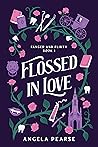
Review: Flossed In Love

Flossed In Love (Fanged and Flirty #1)Flossed In Love by Angela Pearse
My rating: 5 of 5 stars

This is a very fast paced book book that ends on a major cliffhanger, which was perhaps my only complaint. Aside from that, it is very well written.

There is a dual timeline, one which follows the life of Florence in the past and other in the present. The present timeline has two narrators- Damain the Dentist and Floss (as Florence prefers to go as now). 'A dentist with a girlfriend called Floss', the coincidence is not lost to our Dr Rhodes. I found Florence's voice from the past when she was newly turning into a Vampire most interesting. In particular, the chapter where she discovers her flying powers offers a lot of insight into her character. The voices of the past and present are different (the present voice has retained the use of Moi from her past stay in Paris) and the dialogues are well written and show the difference in norms of time as well as growth of Floss' character. The inner monologue still had a 'modern' voice in the 19th century which breaks immersion.

Unlike me - who has only read A Lady of Rooksgrave Manor and A Declaration of the Rights of Magicians if you take a very liberal definition of the genre - Floss’s guilty pleasure is paranormal romance. While I am not deeply familiar with the genre, I did not find the book to have “too much witty banter and not enough blood-sucking.” Instead, these elements felt well balanced and often cleverly intertwined.

That said, given that this is a relatively short, the author could easily have completed the narration rather than ending where she did.

I received an advance review copy for free, and I am leaving this review voluntarily.

View all my reviews

27 December 2025

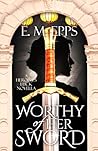
Review: Worthy of Her Sword

Worthy of Her Sword (A Heroine's Luck)Worthy of Her Sword by E. M. Epps
My rating: 3 of 5 stars

This is a adventure/fantasy short story/novella following Tinsa on an undercover mission as a maid so as to earn her role as a 'Heroine' officially which in proper career part with various levels of certifications in the universe. The language is contemporary but still the prose (excepting the dialogues) have a certain charm. That said, dialogue attribution is occasionally unclear, disrupting narrative immersion at key moments. The actual operation, the mental breakdown following the mission as well as the little romantic plot all seemed to be rushed. Perhaps it was a prequel and not reading the earlier parts made it seemed rush, but still the work stands as a standalone. The world building however was interesting enough and enough (deliberate) opaque refrences to House Gaurjo to warrant reading A Winter of Fish and Favor.

This review was in exchange for an ARC.

View all my reviews

23 December 2025

Review: My World Line: An Informal Autobiography

My World Line: An Informal Autobiography My World Line: An Informal Autobiography by George Gamow
My rating: 5 of 5 stars

Unlike Halmos' I Want to be a Mathematician: An Automathography this is not a very detailed memoir or contains tips from the author to a new generation of scholars. In the foreword it is mentioned that the author once considered naming his autobiography "Fragments" and that would have aptly described the book. Still, much like Halmos’ writing, the book is humorous and rich with anecdotes. It reads less like a conventional autobiography and more like a loosely chronological collection of personal stories. In that sense, Gamow comes across almost as a Soviet born Feynman. Indeed this book reminds me of The Pleasure Of Finding Things Out: The Best Short Works Of Richard Feynman. One thing I found rather curious was the lack of any mention of Feynman in the book, given that Gamow pretty much name drops all of the other people on the field. They were even friends and Feynman was a member of his RNA Tie Club too. But still missed. Also unlike Feynman and Halmos, Gamow shies away from actually explaining the science in detail, perhaps trying to keep the bar for audience lower. Also the last four or so decades of the life (in America) are too rushed. They were intended to be outlines but the author passed away before filling those out.

On a side note, it is only by reading lives of people does one fully grasp how close certain historical events were. Born in Odessa (now in Ukraine) the author loved through the Russian revolution, the world wars and the atomic attack on Japan. Since these are just background events in the life of author, the pacing seems to be complete off from mere reading off dates in a history book. It is difficult to imagine the same boy asking for fresh water from British Royal Navy submarines docked in Odessa later asking his British colleagues for help escaping the Iron Curtain. It is even harder to imagine this given the visuals of the current conflict in that region.

It is only a lament that current crop of scientists have stooped writing such autobiographies, which blend personal history, intellectual culture, and humor so effectively.

View all my reviews

20 December 2025

Pythagoras, Baudhayana or Meera Nanda?

 I recently started reading Meera Nanda's Science in Saffron: Skeptical Essays on History of Science. This is about some pseudoscientific claims made routinely by people on the Hindutva side. While our side is indeed suffering from many quacks, something which I myself have noted previously, but still the publisher 'Three essays collective' is a known leftist publisher. Also the book is dedicated to her "comrades". Predictably the preface starts with bashing the Sangh. 

However, while ideologically opposite to us, Nanda is still a scholar. She is not a a humanities type trying to weasel her way into the debates of sciences. She is a PhD in Biotechnology from IITD who have later branched into history of sciences. She is a someone no responsible person should ignore, for निंदक नेड़ा राखिये. Her sharp tounge and witty-to-her comments are more than countered my her scholarship and research. One can disagree with her philosophy that harmonizing science with traditional worldview is not conductive to reasearch (while I agree that radical decolonized relativist "science" say as taught in New Zealand is, but disagree with Nanda on the very thought being wrong), still, her footnotes does not care about our feelings. We can't attack the thesis unless we learn the facts. Perhaps she is not actually anti Hindu and writes against Hindutva side exclusively only for it is now rightfully and joyfully the dominant force politically. Still even in the first 50 or so pages she did give a much softer rapt to African scholars claiming more than their share of mathematical discoveries. This is much relevant when now there have been attempts to portray Yoga as an African practice.

I have read till the end of first chapter only and I did change my views. I read a rejoinder to it ( more accurately a earlier version published as an article) but it is mostly rhetorical and trying to catch her in a gotcha moment when there are none. As facts stand now (or at least in 2016 when the book was written) the first statement as well as proof to what we call the Pythagoras theorem are chinese in origin. Nothing can be done about this fact. It does not make us inferior. She rightly acknowledge that the Suvlasutras tackle a very challenging problem and can be appreciated even if it were not the source of Pythagoras theorem. There is a very nice article in Bhavana (excellent magazine) exploring this. The author however uses the term Baudhāyana-Pythagoras Theorem. To Meera Nanda the mere act of naming is just a childish act of one-upmanship and turing science into a zero sum olympics fought by civilizations. 


A altar that needs to a made with very specific ratios.


Her exposition is very clear, it would be a delight to read a textbook written by her. The citations check out. One has to concede this chapter to Nanda. 

18 December 2025

2025 in Songs

I think the trend started with Spotify, but now everyone does it. We have "Your Music in 2025" based on just 11 months of the year. I don't know if this is the result of a declining attention span or overflow of "New Year's Season" in the Western conscience. Some make a good case that it's a business decision primarily. Either way, we must do what we must. Fortunately, GR have buckled the trend and will only release it after the new year hits its HQ, which is like an extra half a day for us in India. But still good. I wrote a post about after 2023, and it was my first post here. How the time flies, it's almost two years. As I mentioned then, NISER did change me a lot. Earlier, the only music for me was downloading and listening to Kavitas when my mother went out for shopping. Or well, game music such as my favourite from CK2's own band- Until the Day We Die. We didn't have a headphone culture at home ever before Corona. Corona did normalize it.

But my actual journey as a consumer of music started only at NISER. It accelerated when I started coming to my office 333 last winter. I also bought my tablet (not iPad, its a Lenovo and I have no regrets) and friendship with DD started. We would often just set up music on my tablet on my desk (about which I have obviously written a post) and then talk for hours, or sometimes she would just sit beside me, and we would study separately, with the silence broken only occasionally with either requesting a song or appreciating the old song the other had chosen. We did exchange a lot of tastes over the year. But as the soft mud, I took more than I gave back to the potter's wheel. Still, I managed to make plant  Jutti MeriSindoor Lal Chadavo and Are Babuni Ke Shahar Ke Lagal Ba Hawa in her mind on loop. 


2025 YTM Recap

This is mine for the year. I think most of the "UK artists" are Indian (mainly Punjabi) artists based in the UK rather than native English musicians. I think there are a lot of them. For the top artists, Taylor Swift is a gift to me by DD. I am almost a Swiftie now. They even made a list of the top 50 songs I heard, which can be accessed here. Since I have now been converted into the "songs one listens to tell a lot about the person" camp now, I think it would be a duty upon be to write a few lines on the top songs of the year for me.


Top 10 songs I heard thus year by number of hears.

The top song is Jutti Meri. Punjabi/Dogri bridal song where the bride playfully rejects going to in laws unleless the husband himself comes. The final stanza, "Thumak Thumak Jaani Aa Mahiye De Naal" always puts a smile on my face. Its kinda cute. Wedding music has its own charm. In our side of the country, it is tradition to abuse the Baraatis as the Baraat arrives. Even Sri Ram wasn't exempted. My mother used to tell me the old songs in our family for this purpose. That is the only real connection I share with Sadri/Gawari/Nagpuri. Sadly, the practice is dying out. 'Janakpur ki naaris' did not let down the practice, and I hope my future Saalis too preserve it. 

'London Boy' is perhaps the first English song I came to actually enjoy. I especially like the BBC Radio version. The song was stuck in my mind for quite some time. Once DD told me a banagli nursery rhyme as a joke, which of course sparked linguistic and philosophical debate about House vs Home. The song was supposed to help her case, but the line in question stuck with me deeply.

Next are two songs by Maithali Thakur, recently elected an MLA. I was her fan ever since I heard her and the brothers singing जुग जुग जियसु ललनवा . She seemed like a 16 year old grandmother. Her contribution to preserving our heritage is most respectable. But DD doesn't like her. Even less so after she got the BJP ticket. My political views are openly written. So Maithali Thakur is an early morning listen for me, before DD comes in.

Raat ke 2.5 baje is a fun song for me. Very carefree. Good to play in the background when one is playing 29 casually. Or just typing out the project report in LaTeX. 

Pataka Guddi is a similar one, but somehow a bit more touching to the heart. I have recently been discovering layers of meaning in the songs, such as the use of the word Jugni, and it makes everything even better. Also, I finally saw the final (DD being the Alia Bhatt fan managed to bully me into it) ,and it is good too. 

Sindoor Lal is my export to DD. It's now her go to pre exam stress song. Jay Ganpati Bappa! 

Thar Coast by Rapperiya Balam is a surprise entry. Rest all songs I will normally play myself before letting the algorithms take over.  Rapperiya Balam is brilliant, mind you. His nationalist and religious lyrics both work. As do the more typical Gangsta raps. But I can't even recall lyrics on Thar Coast. Weird. Weird. One more reason we need recaps and data. I would have never guessed it otherwise. Still somewhat weird. 

The next two are Bengali songs, courtesy DD. I, in fact, like a lot many Chandrbindu songs now and know like half the lyrics. Two years back, I only knew they called puris as luchis, a few lines of Ekla Chalo and "Ami Tumike bhalobahashi". Now I can recommend even some Bengalis some songs in their own tongue. My latest favourite is this folk song that DD played to tease me over the 'new girl'. but now I am enjoying the songs. What doesn't kill you... 


These recaps are explicitly about songs, but when one starts to brood over it, one recalls the silences, the laughs, the fights, the tears and everything that made the year as it was and made the person I am as one looks forward to 2026. 

05 December 2025

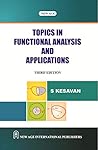
Review: Topics in Functional Analysis and Applications

Topics in Functional Analysis and Applications Topics in Functional Analysis and Applications by S. Kesavan
My rating: 4 of 5 stars

Despite the name, this is one of the better written PDE books out there. It treats partial differential equations as applications of functional analysis, and its handling of function spaces and operators is correspondingly rigorous. While this book came about earlier, it should be used in conjunction with Kesavans' Measure and Integration and Functional Analysis. When reading those two books, readers will find that there are certain results not normally available in books on Measure Theory of Functional Analysis, but which are used in this book. The only thing missing is that the new editions should directly refer to the said results in the other two books, rather than one frantically searching for the actual statement based on what one needs. The authour also has a NPTEL course, avaible on YouTube, to go with the book, but the quality of those I can't judge for I haven't watched the.

This (3rd) edition is the best one for me, the earlier editions, especially the first one Topics in Functional Analysis and Applications, have many many typos and omit several important topics. The latest (4th) edition retains all the typos and mistakes of the third, the main change is the typesetting, which is more "modern" and non-compact. Also, the price. Up 33% from 300 to 400. NO typesetting is worth that.

Still, there are errors in the books. Notably, in the section related to the Trace Theorem. One should refer to Krantz's (he does write on almost everything I need) Partial Differential Equations and Complex Analysis and McLean's Strongly Elliptic Systems and Boundary Integral Equations. The section on Sobolov Spaces should be supplemented with Real Analysis: Modern Techniques and Their Applications and the boundary Sobolev Spaces can be better learned from J-Holomorphic Curves and Symplectic Topology (COLLOQUIUM PUBLICATIONS (despite the Scary sounding title, I still haven't dared to try comprehend what title is about, the relevant appendix is self contanined and rigorous in treatment). Keeping a standard PDE reference such as Evans’ Partial Differential Equations at hand is also advisable, as one can easily get lost in the functional-analytic machinery and techniccalities.

In summaryt this is a good textbook for a secon course on PDEs with a Generlized Functions viewpoint. Moreso for people primarily working on hard analysis who view PDEs as a tool for their work and those who are fed up with the general lack of rigour in PDE books as a whole.

View all my reviews

02 December 2025

Sanyal's Two Beers, a Few Laughs, and Many Abrupt Endings


Just finished reading "Life over Two Beers and other stories" by Sanjeev Sanyal. This is Sanyal's. better known for his non-fiction works and being in the PM's Economic Advisory Council, first attempt at fiction. He chose the medium for he laments the loss of short stories and satires in contemporary Indian literature. While I agree with his diagnosis, this collection of about fifteen short stories and a couple of poems is not the cure.

Most of the stories are set in modern metropolitan India, and the satire is mostly aimed at the buddhijeevis—the inhabitants of the IHC, the cultural-intellectual elite. While the undertone of satire is there, as Ashish Taneja' also notes, it is often too thin and difficult to appreciate. The stories are too short and the endings seem abrupt in most cases.

 Sanyal can be a delight to hear when talking of domains he knows of, like his talks on  Process Reforms. I think more important to appreciate is that he is actually carrying out the reforms and nit just an advocate for them. While I have not read his non-fiction, I have seen his lectures and debates. He even had a show called Economic Sutra on RSTV to basically sell the current government's reform agenda, but that seems to have been discontinued. I liked that. It was a good show for people who knew nothing of economics as well as those who keenly followed the public policy debates. But alas, Prasar Bharti works in mysterious ways. In the collection too, "Drivers" and other stories which focused on the side working of the government stood out. "Used cars salesman", "Bench by the lake", "The intellectuals" were also good. Ironically, tales not set in contemporary India fared better to me. "Revolution of Humour", "The Return of Imagination" and the "Conference Call" were in this category. The first two of the three were set in distant exotic lands in past times, which I felt the author had a real knack for writing such settings, more so than for portraying contemporary India.

Here is my GR review. I will not link the other way around as one would normally expect due to reasons noted previously.  The Harmonic exam went well enough in terms of marks (should one have just memorised the assignments, it was a 100/100 paper), and it is as a treat I reward myself with writing this post despite the Advanced PDE exam tomorrow. Not that I was 100% seriously studying for harmonic. I finished The Housemaid's Secret and read half of Sanyal's collection yesterday. Just one more day and the semester ends. The atipication kills one before, and relief afterwards. 


13 November 2025

Poker Face: Less-than-anticipated-but-still-good beat?


I have recently started watching webseries. Started with Sitcoms, the first one was How I met your Mother. But am now diversifying a bit. Poker Face is one which I liked. The leader charector is a human lie detector and often gets involved in murder cases which require her skill to unravel. I will confess that I was looking for a Poker themed show when I can across this show, but the comdey-mystery did get be hooked up. I ended the first season and it was genius.

For much of the first season, Charlie the lead character was on the run, living off her car. Many episodes were set in rural Texas. This is a part of USA I seem to be discovering a lot recently. Sheldon is from here, and as such both Young Sheldon and Georgie and Mandy's First Marriage is set here. Recently, I read 'I was a Teenage Slasher', it didn't work for me but the description of the country life was vivid. And now Poke Face, the loke star state reaches out to me. There is a small, but as of now very distant, possibility that I may land a Postdoc position in Texas. But thats something I can worry about in like 5 years, for now, more pressing carrer update is having a seminar on 25th of this month.

Simon Helberg, more familiar to me as Howard from The Big Bang Theory and Loki lookalike, plays a FBI agent and he is indeed a good actor here too. The lead actress, I will confess that I don't recognise her from anywhere, is simply fantastic. The way she walks and talks just makes Charlie seem a real person. 

Come season 2 and a few episodes in Charlie doesn't really have much reasons to be on the run. Can't settle she prays, and we all go with it. Well the intresting thing is the varied location and situation and sections of contemporary American populace the show offers a world view into. And Charlie is not a investigators for hire, it is only that she keeps finding herself into such situations. A normal episode is normally non linear, Charlie is missing for about 25% of it and then we get a recap of the entire show from Charlie's POV and we get to know how she was connected to it. I really like this structure, a quater of each episode is just a new world. And like a spiral model of reinforced learning, we come back. This non linearity of narration is something I loved about HIMYM. This video explaining why it's spinoff failed does a much better job of saying what I want to say. 

But the absence of Charlie (and her powers) from the beginning of each episode that made the narrative unique now seems to have oozed into the entirety of the season 2. In many of the episodes the ability to detect Bullsh*t, as the captions put it, is only tangentially involved. In fact, some episodes may have been without Charlie but anyone else in her place and it won't have went much different. I will not say it is bad. It is good, entertaining, brilliant at times even. But still, as a blog puts it "This is not the Poker Face we were sold." (btw Good and more importantly active blog that I found today, read the review of the First part of the second season too.).

It is like the SJG book stripped on horror elements, it is good but could have been better. It is getting a flush on the river rather than the straight flush that was promised. I will not be continuing with the series as such. Bullsh*t! Okay, but this is not a reccodemndation I'll give to anyone. Bullsh*t! Okay, Okay, I still love this, the directors and writers are good. I need more of them, as I do of the lead actress. 

12 November 2025

I - a straightener a la Collins

 I recently started Billy Collins' Horoscopes for the Dead. It has been on my TBR list since 2021! I don't remember why or what prompted it to be on the list. But should I be asked to hazard a guess, it would be my roughly semi-annual urge to appreciate, understand or at least read English poetry.

The Romantics and the Ballads are fine, but it’s free verse that I normally struggle with. Poetry by and large has been absent from my reading this year. I think the only one I read was वर्जिन: काव्य संग्रह, which, while Hindi was in Free Verse and more akin to the Modern English poetry rather than the Dinkars, Gupts and the other Rashtrakavis I hold in regard. Now that I look at Goodreads, the last poetry book before that was मधुशाला which I read in 2024. I started reading both these years ago but managed to finish them when I did only. But indeed Bachanji was a treat, to be savoured like expensive wine. 

भावुकता अंगूर लता से खींच कल्पना की हाला,

कवि साकी बनकर आया है भरकर कविता का प्याला,

कभी न कण-भर खाली होगा लाख पिएँ, दो लाख पिएँ!

पाठकगण हैं पीनेवाले, पुस्तक मेरी मधुशाला।

He is said to have written it before he started drinking. I may not have the "लोहू में है पचहत्तर प्रतिशत हाला" (seventy-five percent alcohol in my blood), still, I would use the "पाठकगण हैं पीनेवाले" (readers are the drinkers) as the basis to defend my right to employ the wine metaphor.

Anyway, the goal was to read more poetry. And so I am.

Billy Collins is the sort of poet I don't normally get. He writes like one speaks, no rhymes, no metre (or at least the one whose cadence is less noticeable). No heavy use of alterations. But this everyday speech flow and the poetry grounded in everyday life are what made it more palatable. After reading this, should one be disapointed at the lack of vakchautya, he will at least not be completely lacking in what happened. The hidden कवि कहना चाहता है कि may be not so hidden, but that's charming in its own way. This book is a bit soothing even when grief is a major theme.

Anyway, this is not supposed to be a prescription of what I like in poetry. I just happened to resonate with one of the poems. 'The Straightener', which can be read here (I myself am unclear of the legality of hosting a poem from a book in a personal blog as she did, but whatever).  


I love to organise my desk in my office. Some piles are arranged by thickness, but by width, and some by colour. The piles themselves are organized by utility. I just love to do it. No, I just love to complete this, to overcome the inertia is much hard. But once I start, its just peace. Once in a while, I will reorganise DD's desk too. It feels like Shramdaan, Karmdaan, Kaarseva. The peaceful feeling while organizing is there too when I do it for myself only. I remember during class 10 matrix exams making timetables and stuff meticulously. Tracking down every 15 minute chunk, with many chunks reserved for tracking itself!That were the days indeed. Anyway, back to the poem. 

Never tomahawk, lantern, and spyglass.
Always lantern, spyglass, tomahawk.

Yes indeed. Once decided, things are set in stone. I can be the greatest Lakir ka Fakir at times. I love self imposed rules. If I had some legal background, I could feature among the absurd anecdotes in Restart: The Last Chance for the Indian Economy (my GR review here). But actual babudom is torture to me. Foucaultian-poststructuralist-imposed-structural-violence should I refer to Akhil Gupta's Red Tape: Bureaucracy, Structural Violence, and Poverty in India (the book unirnoncally uses the terms, more can be read in my GR review here). The view is supported by the "I" in the poem too it seems:

And if I can avoid doing my taxes

Only if we all could do so, I am not an anarchist. I once read (and did a GR review of) von Mises' Bureaucracy. I agree a lot with him, self imposed rules are not the same as those imposed by the punitive backing of the state. I am currently reading The Bureaucratic Phenomenon which seems to diagree with this view of Mises, but I am yet to see his complete thesis and have just started it.  But at the very least i am no anarchists, I am for a strong state but at the same time hate the Babudom to its core. I don't know what I I am exactly, I feel a bit like the protagonist in English, August: An Indian Story. I feel like him in a lot many ways and I think I will pen down those thoughts once in a while. That I must do, but I must write a thousand other things. But this is somewhat more serious and personal than others. 


Sociology and fictional IAS babus aside. Back to the poem. The "I" in the poem too must feel the same tranquillity that the I do in real life. He too shirks social and legal obligation and prefers to straighten things out. The "I " has 

a note from a girl I was fond of.


As did I! It was a note saying we shall study Topology after we have lunch (separately). She planned things with me in writing! It was on my table for many months.  DD discovered it once and had a lot of fun teasing me. Good for her, I give her much pain, she can use this distraction. I have given over that girl now, but did the "I" in the poem ever express his feelings? Or perhaps he already did and it was reciprocated, and the note was a witness of that hence kept on the table as a trophy. Or maybe it was just an innocent note like in my case, kept as a reminder that he must act or perhaps a memoto. We will never know, but I hope the best for the "I" in the poem. He seems to be doing well. In fact:

Today, for example, I will devote my time
to lining up my shoes in the closet,
pair by pair in chronological order

and lining up my shirts on the rack by color
to put off having to tell you, dear,
what I really think and what I now am bound to do.

The rhythm of "tell you, dear ... what I now am bound to do" sounds so much better than it would have without the "dear." I don't know if there is a technical word for that, but perhaps it's not important. I can just enjoy it as it is. Maybe. The itch to know is too strong. Straighten, I must. But perhaps now. I will keep some things absolutely straightened out, and some will be the most convoluted. Like my thoughts, like this very post. I don't know perhaps it is that I can't tame my thoughts that I cut off artificial physical sacred zones that must be straightened out? Okay, no more pop self Freudian (?) diagnosis. Off (to straightening out my desk). 

Review: The Housemaid is Watching

The Housemaid is Watching by Freida McFadden My rating: 4 of 5 stars Quite a difference pacing and time ...
Most Read in the Last Month