Showing posts with label ARC. Show all posts

08 February 2026

Review: Enthralled By You

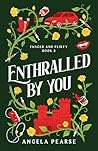
Enthralled By YouEnthralled By You by Angela Pearse
My rating: 3 of 5 stars

I received an ARC copy for this, like I did for the first book in the series Flossed In Love. My main complaints with the first book were its short length and ending at the high stakes cliffhanger. This book is even shorter, and while it resolves the cliffhanger, it loses all the built up tention from the last book. Big events happen, but they feel anticlimactic. Take transformations into a vampire for example, in the first book, we see only one transformation and another character weighing on another potential transformation formed much of the plot for it. In this part, however, we see 4 back to back transformations and another in the flashback! None of which held the seriousness or gravitas or even time devoted to Floss' transformation. Still, it is a very quick read, but the main gain from the book is resolving the initial cliffhanger and introducing a new set of characters for the final instalment of the trilogy Biting My Knight, which I do plan to read. Hopefully, the last book will raise the standards.

View all my reviews

14 January 2026

The Zoo and the Empire: On Soul in a Shell

I received an ARC for Soul in a Shell by Dylan Byall (linktree link provided at the back of the book itself) and am writing this post as an honest review. The book is not yet on GR and I am too fed up of GR librarians and the slow process to change stuff there that I will not make a request to add this. If and when that happens I will post a shorter review on GR too. Keeping up with the tradition, this post will not be linked there. 

Now to the book. It's mostly a poetry collection with some prose sprinkled here and there. It was published in September 2025. The author mentions being a fan of Gertrude Stein, John Steinbeck, Fitzgerald and Hemingway from his teenage years. Except for the last I can't claim to be familiar with his literally lineage in the sense of reading their works. But the author characterizes their style as observational and a voice of the subaltern. The author well managed to try score of those axes. The author is a US Navy man posted for much time in Japan and the writing of the book began during the Corona Pandemic.


The author manages to integrate well the black redactions in this poems. An extreme example is this:


I don't know if the technique is used much or the author is a pioneer but it seems to work a lot of times. They seem to capture the current trend of blacking out information well, something even the US government is recently much criticized in relation to Epstein Files. Or closer home, the secrecy surrounding the recent failures of ISRO. The author has even experimented with use of emojis alongside redacted text on the poem titled "I look at my phone and the world, spinning like a bullet, slows". This captures the reality of modern day social media very well with the trolling, censorship, power moding and low level discourse. Redaction technique works well in the poem entitled "Catch-22" too which links censorship of soldiers letters (my mind immediately goes to Feynman messing with the censors) during WW2 to current day censorship by an agency whose name itself is redacted showing that the book is not beyond the laws of the era. The author also tries visual poetry like in "The Wax Candle/ Its Source Code" and many other titles but I don't really like it. But even I don't even get Chitrakavya so maybe it's just me. My edition of छन्दः सूत्रम्: had some of them by the commentator (who was an Arya Samaji and managed to let that influence his commentry) at the end, but they were never explained. And I never tried much on my own too.

The author's naval career anchors a huge part of the book. Beginning from the very description of his recruiter in "The man had many masks", to dates of finalizing of his papers, him leaving the house (July 25, 2017 by the way). He doesn't view it in a favourable way. It seems to be a traumatic experience for him. He compares the soldiers to Zoo animals, in "Zoo" he writes:

Now, I feel like I am part of
Uncle Sam's private collection,
And he's suicidal.

He's just freed me into a new world,
where I'm authorized to be shot on sight
or shipped off
to another zoo.

This was in context of Zanesville Massacre, when a person committed suicide after releasing 56 animals, including apex predators like lions and tigers, loose. I don't usually like these sort of anti heroic view of the armed forces. I am very much a सर कटा सकते, मगर झुका सकते नहीं person. But Joe Abercrombie seems to make it work in Before they are Hanged. And Byall also comes very close here. I think my view on the post world war bases imposed by Americans on Japan also helps. This poem is followed by a prose writing entitled "The Fukuoka Supreme Store & The Fall of Rome". The author writes it towards the end of his service in Japan. He writes that 

Some people see the U.S. as a dignitary trying to pay leader. But in 2023, I imagined it as Maximus Aurelius entering the Colosseum, wounded beneath it's armour. Even though it knew the wound was there, it knew it had to fight. And even though it might collapse on the world stage, it would still step into the arena  — because that's what empires do.

Standing in the Supreme Store, I felt the pulse of something decaying beneath the surface, something true, hidden under the brand's glossy sheen. Maybe that's what made it Supreme, made America supreme. Maybe that's what makes us all.
Something waiting to fight, even when it could already be lost.

Much tragic realism isn't it? The author was a aboard USS Ronald Reagan (he later mentions that some of the poem were actually written during that stint). The motto of the supercarrier (and its a mighty super one at that, which can house the entire fixed wing inventory of Indian Navy aviation arm at the same time) is "Peace Through Strength" which I thought was a Trumpism but while writing this post I learnt otherwise. From this mighty ship, the author circles back to the "Zoo" theme in the poem "Ghost Stories":

as if the gory could outweigh 
the cost of the crown.

At multiple other places the author returns to similar themes. In "Tom and Jerry" he says:

America likes to think itself 
the best of both.

The big cat with the small mouse' mind.
We'll make anything out prey.


His Majesty King Charles III

The next poem to catch my eye was "Portrait in Red". It is about the portrait His Majesty King Charles III. The poet notes that the painting captures realism, his age and such. Much a far cry from when every Tom, Dick and Harry could have crowned themselves the Lord of Totality of Fourier Corners. I think it further evaluates the need or Monarchs in today's day and age. Only today can we except to open newspaper and see pre adolescents second in line to the British throne use that as a brag in their school to gain clout. The King is dead, long the Republic when? Sadly nothing came out of Elizabeth's death. Even India declared a day of National mourning over it! As I write the son of deposed Shah of Iran tried to topple the Islamic Republic to sit on the throne. The author writes:

In these times
they say a social contract 
feels like a deal with Devil.
But I know every deal breeds a devil of its own.

There is a sister poem "Portrait in Blue". A few others have similar sister poems or continuation.

The author was posted in Japan, specifically Yokusuka base. He writes "On High Alert (2021 to 2025)"  to show that it was not an Eastern holiday posting. He took was on high alert during entirety of his deployment. 

"This is the geopolitical hotspot of the world," 
they drill into our heads at sea 
so we remain on high alert.

Machoism of the falling wounded gladiator? 

The poem "United States" touches both the declining empire as well as man as slave of machine themes that form the bulk of the collection. I especially like the ending stanza:

The iPhone,
stuck to my hand,
charging off me,
types:

Sent from my Human.

This does sends a chill. Does send a chill.

I think the poems that focused on these two theames were the most memorable. There were many others too, but they didn't call my attention that much. Truth be told I forgot about the book midway due to all the mess around the New Year and was only recently reminded of it my a reminder e-mail from the ARC agency. 

But the beauty of poetry is that it can sometimes be given a completely different meaning depending on the listener. The extreme example is, of course, Magha' Sishupal Vadh's 16th Canto. But I had a similar (but unintentional on part of the author) moment while reading "Even in War Zones". The entire poem is:

Even in war zones

the lotus dares bloom
in murky, oil- slick ponds
plunked with bullet shells.

To me this is just dedicated to victory of BJP MLA Shagun whose father were uncle were killed by Kashmiri terrorists.

Length of this poem is similar to a lot others in the collection. However some poems span 3 pages too. Overall the lengths are very mixed. The style is mostly free verse, but a few have some sort of well rhyme scheme, especially in the second part called "Ctrl". This I think is a conscious choice.


There seems to be only one other public review at the time of writing, which is by Dr Dudas on Reedsy. He calls it a 'Must Read' but I will be much held back in my praise. The author mentions that he has already started work on its sequel "Ad Disastra" but it won't be an automatic TBR for me. Perhaps my tastes in poetry are already too strong, but it was still a nice way to get out of my comfort zone.

In summary it's a 2.5/5 for me. And if you (like GR) wants to force an integral value, I must round it up to 3/5.

10 January 2026

Ch 25 of The Pickpocket’s Letter: The Dying Sanyo, and a Very Alive Cliché

Continuing with Anil Nijhawan's The Pickpocket's Letter, as promised to the ARC agency, up from page 32 to page 142 (2/3 done). And it does not improve. There seems to be now a dual timeline (as well as the narrator's digressions and comments, which jump the timeline even more). Unlike Flossed In Love this does not work here. This is supposed to be a letter narrated by a semi-literate pickpocket. This is not supposed to be an ‘अस्ति कश्चित् वाग्विशेष:’ moment (not that I may be accusing Kalidas to be matching Mr Nijhawan's prose in any sense). 

I am at Chapter 25, that's 7 pages per chapter on average. But the chapter length varies considerably. At least the flow is natural.  I find that the Sanyo voice recording machine is also a full-fledged character in the story. The model isn't mentioned, but it might look like this(image courtesy of Saudi Amazon), considering the timelines:


sanyo trc580m microcassette recorder dictating
It's 20 years old, but 'works like a dream in the opening chapter. But as the pages progress catches up to its age. On page 100, it shows the first signs of sleep apnea. In the 25th chapter, it dies. This might be the genuine most genuinely saddest I have felt up to this point. I may have a list of 19 tragedies in the first 32 pages itself, but the Sanoyo thing was the only one built up slowly and the only thing that felt real. 

Deenu and his friend Sanju tried very hard to save it, but they couldn't. Sanju is somewhat relieved from this, as he was the one who had to type out the voice recording. Deenu felt genuinely sad at this point

I had grown so accustoomed to its purring sounds, the clicks and clanks, its silence was distrubing me. 
The chapter then changes tracks to a discussion of religion (following overspeeding), which, mind you, started with Islam, but the killing blow, of course, had to be taken by the Hindoo, and we get the most cliché statement:

religion is a bad thing. The idea of going to heaven is nonsense; its's a concept created by rich Brahmins to keep the poor lower castes from rebelling. 

This is exactly what Mundaka says, right?

परीक्ष्य लोकान्कर्मचितान्ब्राह्मणो निर्वेदमायान्नास्त्यकृतः कृतेन ।
तद्विज्ञानार्थं स गुरुमेवाभिगच्छेत्समित्पाणिः श्रोत्रियं ब्रह्मनिष्ठम् ॥

I think perhaps the author can handwave the dialogue as thoughts of the street urchin rather than his own. And the chapter ends as it must with:

So now, we are back in Business, Modiji. 

08 January 2026

To Modi, Via Office of Oppression Olympics, From Mr Nijhawan

Your Highness Mr. Narendra Modi, 
You are the prime minister of India, one of the world's largest democracies. They say you 
This is the words of Deenu a semi literate teenage orphan who have apparently been forced by circumstances to become a pickpocketer for an organized criminal organization in Anil Nijhawan's The Pickpocket's Letter which I am currently reading. Why I say apparently is for I am on just page 32 of the book, and it's the ARC epub file so it's counting the title and copyright and all that stuff too. Why I needed to stop and write a post here I will tell in a moment but I think the fact that Deenu used Yours Highness rather than the correct style Honorable tells us that he indeed is semi literate in universe as well as the Political leanings of the author in the real world. Remember the 'No Kings' in the west?

But back to India and back to the book. In just the few pages I have left we have already encountered:
  1. Caste Oppression 
  2. Child Trafficking 
  3. Ingrained victimization 
  4. Trivialisation of Hindu rituals 
  5. Caricature of Pandits ("as if she needed blessings by the potbellied men of God who chewed pan and gutka while chanting Shlokas")
  6. Child Abuse
  7. Child abandonment 
  8. Child sexual abuse
  9. Child Sexual abuse (but the offender and victim are both female this time)
  10. RSS ki Sazish "It is not you [Modi] but the RSS who are in charge." 
  11. Animal abuse
  12. Sociopathic behaviour 
  13. Sadism
  14. Body mutilation 
  15. Schizophrenia 
  16. Other mental health disorders
  17. Loneliness epidemic 
  18. Acceptance of hierarchy, of मात्स्यन्याय
  19. RSS is actually Taliban ("It's a rightwing Hindu organisation. It wants to turn India into a Hindu Rashtra, a bit like the Taliban, who wants to create a Muslim state.")
This may not be complete for I started reading this as a fiction and not keeping track of all the categories of which categories of Oppression Olympics the author wanted the book to compete it. Liberal (pun intended) does of variants of "Now, Mr Modiji" is sprinkled throughout the text. 

There is a story which upto this point is how Deenu lived in an orphanage and wants to escape from it and later works as a pickpocket but it drowns down while meeting the criterias for the Oppression Olympics. Sadly it makes not for an intresting read. 

I know I am not the most humane and compassionate man and the blog is witness to my shortcomings  but still I can tolerate, even appreciate, social messaging in fiction. I think most good fiction (and not the trashy quick stress busters which I confessed to have stared reading) gives some kind of message even if the author didn't actually intend it to have one at the start. Even if it has a social message, it can be very powerful. Bitter Virgin the manga bought even me to tears. I have never looked at rape victims the same before. It also awakened a love for the art of Manga. 

This work however does nothing of that sort. It's a political rant wrapped in a story. The accumulation of suffering feels less like insight and more like a checklist, and the narrative is repeatedly sacrificed at the altar of ideological urgency. Suffering is piled upon suffering without allowing any one of them the narrative space to breathe, reflect, or transform the characters meaningfully. It's just the Operation Olympics version of Club 99 from Krish, Trish and Baltiboy. Had this not been an ARC copy, I would have dropped the book here. But I must keep my word and read on, even if only to see whether the story ever manages to reclaim the space it has surrendered.

29 December 2025

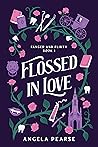
Review: Flossed In Love

Flossed In Love (Fanged and Flirty #1)Flossed In Love by Angela Pearse
My rating: 5 of 5 stars

This is a very fast paced book book that ends on a major cliffhanger, which was perhaps my only complaint. Aside from that, it is very well written.

There is a dual timeline, one which follows the life of Florence in the past and other in the present. The present timeline has two narrators- Damain the Dentist and Floss (as Florence prefers to go as now). 'A dentist with a girlfriend called Floss', the coincidence is not lost to our Dr Rhodes. I found Florence's voice from the past when she was newly turning into a Vampire most interesting. In particular, the chapter where she discovers her flying powers offers a lot of insight into her character. The voices of the past and present are different (the present voice has retained the use of Moi from her past stay in Paris) and the dialogues are well written and show the difference in norms of time as well as growth of Floss' character. The inner monologue still had a 'modern' voice in the 19th century which breaks immersion.

Unlike me - who has only read A Lady of Rooksgrave Manor and A Declaration of the Rights of Magicians if you take a very liberal definition of the genre - Floss’s guilty pleasure is paranormal romance. While I am not deeply familiar with the genre, I did not find the book to have “too much witty banter and not enough blood-sucking.” Instead, these elements felt well balanced and often cleverly intertwined.

That said, given that this is a relatively short, the author could easily have completed the narration rather than ending where she did.

I received an advance review copy for free, and I am leaving this review voluntarily.

View all my reviews

Review: The Housemaid is Watching

The Housemaid is Watching by Freida McFadden My rating: 4 of 5 stars Quite a difference pacing and time ...

Most Read in the Last Month