Showing posts with label Film. Show all posts

22 March 2026

Fifteen Minutes from China Gate: Colonial Memory and Cold War Mythmaking

 This motion picture is dedicated to France. More than 300 years ago, French missionaries were sent to Indochina to teach love of God and love of fellow man. Gradually, French influence took shape in the Vietnamese land. Despite many hardships, they advanced their way of living, and the thriving nation became the rice bowl of Asia. Vast riches were developed under French guidance until 1941, when Japanese troops moved in and made the rice bowl red with the blood of the defenders. In 1945, when the Japanese surrender was announced, a Moscow-trained Indo-Chinese revolutionist who called himself Ho Chi Minh began the drive to make his own country another target for Chinese Communists. Headquartered in the North, he called the new party Viet Minh. With the end of the Korean War, France was left alone to hold the hottest front in the world and became the barrier between communism and the rape of Asia. Members of the Foreign Legion imported from North Africa fought valiantly under the French flag, but the ammunition pipeline from Moscow could not be found. Bombs and shells made in Russia were stocked in secret tunnels along the mountain range of the China Gate. This arsenal was winning the war for the Communists.

These are the opening lines of the narrator in China Gate (1957). This is not an ironic suffering from white man syndrome narrator, but an actual dedication of the film. Truth be told, I had no intention of watching western pro imperial cold war propaganda a day before my NBHM interview (and in case I only watched the first 15 minutes, for DD keeps scolding me to go back to studying for the interview, she is out on lunch when I am typing it), I was trying to watch the Bollywood China Gate (1998)but me being me made an mistake and this happened. Not the first time I made such a mistake, it happened before with The Flight of the Emperor. 

Whatever the circumstances, the black and white film has declared the White colonists to be perfectly white in their actions in Viet Nam. It was perhaps not enough, the director Samuel Fuller writes in his book, which WP paraphrases as: 


Before China Gate was to be released, Fuller received a call from Romain Gary, the French Consul-General in Los Angeles, inviting him to lunch. Gary said the film's prologue was too harsh towards France and asked Fuller to change it. Fuller refused, but the two became firm friends with similar interests. The film was never released in France. 

Even this level of praising France for allegedly advancing the locals' "way of living " is seen as too harsh. I don't know how to make it seem better to colonial sympathisers, but they did think it had to be. This is the level of propaganda in the 'first world' just a few decades before, and people will call Dhurandhar 2 as propaganda. 

In the little I watched, one thing is clear, the filmmakers are not racists. In fact, academic consensus seems to be these types of war films actually were pioneers in racial unity by pitting Americans as a whole against 'the enemy' or 'the Reds'. In fact, a paper goes on to say:

One thing that did adhere to Fuller’s career in its entirety was a persistent interest in race and racism in the US. Issues of racism against Asians, Asian-Americans and African Americans are brought to the fore in films like The Steel Helmet, China Gate, The Crimson Kimono, Shock Corridor and White Dog, not to mention his script for The Klansman (1974); against Native Americans in Run of the Arrow; and against Jews in the invocations of the Holocaust in Verboten! and The Big Red One.

Still, I found one of the opening scenes to be a bit problematic.  The narrator notes the lack of food in a southern hamlet isolated by the freedom fighters of the Viet Cong. All animals are being eaten up, save for a puppy named Pierre, hidden by a boy we later learn is a main character. 


A man finds the puppy sticking out from the child's clothes and chases him with a knife with hunger in his eyes. Whether it was an attack on dog meat consumption of the Vietnamese people or just a way to show the extent of hunger that an animal so dear to American sensibilities can be eaten is not clear. But I will have to lean towards the latter now that I have read the academic consensus. It will make sense, as The Making of Global International Relations: Origins and Evolution of IR at its Centenary notes that WW2 was just a victory against so-called scientific racism. Another example, 'his only cross to bear is that of eyes' referring to a part Asian child, is maybe just dated language rather than racism, when the film actually does challenge the discrimination against asian americans, as a review notes about the mother of the child:

Lucky Legs occupies the center of Fuller’s preposterous sex fantasy / melodramatic tangle. She has a son by (who else) Sgt. Brock, the ex-husband who abandoned her the moment he saw his child’s Chinese features. Brock is not bothered that Lucky Legs (this is really buried in context) is a prostitute and party girl — but gets freaked out by the thought of having a bi-racial child.

Clearly at attack on the still persisting double game of American morality. Anyway, writing more would not be fair game at this stage, and I will return and complete the review later after finishing.

13 November 2025

Poker Face: Less-than-anticipated-but-still-good beat?


I have recently started watching webseries. Started with Sitcoms, the first one was How I met your Mother. But am now diversifying a bit. Poker Face is one which I liked. The leader charector is a human lie detector and often gets involved in murder cases which require her skill to unravel. I will confess that I was looking for a Poker themed show when I can across this show, but the comdey-mystery did get be hooked up. I ended the first season and it was genius.

For much of the first season, Charlie the lead character was on the run, living off her car. Many episodes were set in rural Texas. This is a part of USA I seem to be discovering a lot recently. Sheldon is from here, and as such both Young Sheldon and Georgie and Mandy's First Marriage is set here. Recently, I read 'I was a Teenage Slasher', it didn't work for me but the description of the country life was vivid. And now Poke Face, the loke star state reaches out to me. There is a small, but as of now very distant, possibility that I may land a Postdoc position in Texas. But thats something I can worry about in like 5 years, for now, more pressing carrer update is having a seminar on 25th of this month.

Simon Helberg, more familiar to me as Howard from The Big Bang Theory and Loki lookalike, plays a FBI agent and he is indeed a good actor here too. The lead actress, I will confess that I don't recognise her from anywhere, is simply fantastic. The way she walks and talks just makes Charlie seem a real person. 

Come season 2 and a few episodes in Charlie doesn't really have much reasons to be on the run. Can't settle she prays, and we all go with it. Well the intresting thing is the varied location and situation and sections of contemporary American populace the show offers a world view into. And Charlie is not a investigators for hire, it is only that she keeps finding herself into such situations. A normal episode is normally non linear, Charlie is missing for about 25% of it and then we get a recap of the entire show from Charlie's POV and we get to know how she was connected to it. I really like this structure, a quater of each episode is just a new world. And like a spiral model of reinforced learning, we come back. This non linearity of narration is something I loved about HIMYM. This video explaining why it's spinoff failed does a much better job of saying what I want to say. 

But the absence of Charlie (and her powers) from the beginning of each episode that made the narrative unique now seems to have oozed into the entirety of the season 2. In many of the episodes the ability to detect Bullsh*t, as the captions put it, is only tangentially involved. In fact, some episodes may have been without Charlie but anyone else in her place and it won't have went much different. I will not say it is bad. It is good, entertaining, brilliant at times even. But still, as a blog puts it "This is not the Poker Face we were sold." (btw Good and more importantly active blog that I found today, read the review of the First part of the second season too.).

It is like the SJG book stripped on horror elements, it is good but could have been better. It is getting a flush on the river rather than the straight flush that was promised. I will not be continuing with the series as such. Bullsh*t! Okay, but this is not a reccodemndation I'll give to anyone. Bullsh*t! Okay, Okay, I still love this, the directors and writers are good. I need more of them, as I do of the lead actress. 

06 June 2025

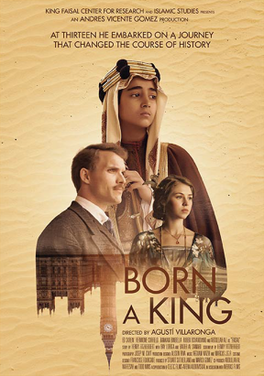
Film Review: Born a King (2021)


 So last month I watched Kesari Chapter 2: The Untold Story of Jallianwala Bagh (2025) with friends (after like a month of bad puns, likening it to my advisor) and it was great, minus it being like almost fully fictional. I liked the performance of Simon Paisley Day as General Dyer. So I went ahead and downloaded another of his films- Born a King (2021).

He plays a small but still kinda -ve role as some kind of secretary to Lord Curzon who favours Lawrence of Arabia (Fun coincidence, the actor playing him is named Laurence.) The film is based on the then Prince Faisal of the Emirate of Nejd. The third and somewhat neglected son gains some prominence after the death of his eldest brother. He, as a 14-year-old and second in line to the throne, is sent to London to negotiate. The film is mainly based on that maiden Saudi diplomatic tour. Overall, the film is great but I fear toes the official Saudi line. Blood and Oil: Mohammed bin Salman's Ruthless Quest for Global Power by Bradley Hope and Justin Scheck (I write a one quote review here) notes how MBS is using Cinema et al to change the image of Saudi worldwide. While at books, the other book on Saudi Arabia I read is Vision or Mirage: Saudi Arabia at the Crossroads by David Rundell extensively refers to Lawrence of Arabia in the subject material as well as in its bibliography. Now Lawrence is on team Hussein as the King of Arabia comes out somewhat anti Ibn Saud from this film and that needs to be factored out while reading Rundell's book. Simon Paisley Day (Kesari's General Dyer)'s character is I-forgot-this-name who works for Lord Curzon and seems to be on Lawrence of Arabia's side. He is the nemesis of Philby (I don't recall that name in either of the books but he seems important, ergo Cinema too is a medium of learning). Both Philby and Lawrence of Arabia turned out to be Arab versions of our own Naboobs, Philby even converting to Islam.  

Leading from Naboobs to our India, the phrase Divide and Rule seems to be not just a uniquely Indian anti-colonial line but also used a lot in the film. Some reference is made to the British trying to divide and rule the House of Saud, examples being between Prince Faisal and the advisor from Constantinople and inducing maltreatment of what is totally-not-a-slave-as-he-is-once-referred-to-as-a-brother by Faisal, an African. But in both cases, the division plays out to Faisal's favous, so its all good I suppose? Should have put more effort into showing this. But then Arabs are not victims of colonization in the same sense we are. Or in fact they are not liberated from its clutches in the sense we are. The Emris and Sultans they have are but equivalent to our class of collaborating "Princes". On this as well as the slave thing, but views are coloured by a recent viewing of Aadujeevitham (2024) (Nice Malayalam film, do watch). 

Anyway, nice film, should watch. 


Review: The Housemaid is Watching

The Housemaid is Watching by Freida McFadden My rating: 4 of 5 stars Quite a difference pacing and time ...

Most Read in the Last Month