Showing posts with label Books. Show all posts

16 April 2026

Review: The Housemaid is Watching

The Housemaid is Watching The Housemaid is Watching by Freida McFadden
My rating: 4 of 5 stars

Quite a difference pacing and time skip from the other two books of the trilogy. Millie is now a proper housewife and mother of two and the threat level of the book did went down. I feel the author have improved her prose from the first book, especially in the first half of the book. It seems more polished and finished now. To me, The Housemaid's Secret was bit of a letter down from the first one, but this book surpasses both of them. Middle book syndrome in action, perhaps.

lso, the book can be read without reading the earlier books as a standalone. While it is indeed the same formaltic thriller as the first two, Millie while being the first person narrator for almost 80% of the book is not really a doer. In style and structure the book is closer to the orginal book.

View all my reviews

09 April 2026

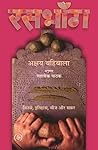
Review: Ras Bhang

Ras BhangRas Bhang by Akshaya Bahibala
My rating: 2 of 5 stars


ये किताब बहुत कुछ करना चाहती है, लेकिन अंततः असफल रहती है। आत्मकथा, यात्रावृत, सामाजिक चित्रण एवम् ऐतिहासिक-चिकित्सीय-वैधानिक लेख, सब कुछ समेटने का प्रयास है। इसमें मेरी माने तो केवल पहला ही हिस्सा रोचक था। शोध उतना कुछ खास नहीं है। पढ़ने के बाद ये भी प्रतीत होता है की लेखक उड़िया होने के बावजूद भी काफ़ी हद तक स्थानीय प्रथाओं स्थानीय परंपराओं को एक बाहरी दृष्टि से देखता है। मैंने सोचा था ये मूल रूप से उड़िया में लिखी किताब का अनुवाद है। लेकिन असल में Bhang Journeys: Stories, Histories, Trips and Travels मूल किताब है जिसका अनुवाद Vyalok
ने किया है। भाषा बहुत सहज है और मालूम नहीं होता कि इसका अनुवाद अंग्रेज़ी से हुआ है । Abhishek Shukla की Deep Work और M.L. Parihar की Jaat-Paant Ka Vinash (जात-पांत का विनाश) दोनों में साफ़ पता चलता है, पर यहाँ ऐसा नहीं है। यद्यपि किताब उतनी खास नहीं है, फिर भी आधुनिक हिंदी अनुवाद के एक नमूने के तौर पर इसके लिए विशेष स्थान है।


View all my reviews

13 February 2026

Review: ख़ामोश! अदालत जारी है

ख़ामोश! अदालत जारी है [Khamosh! Adalat Jari Hai] ख़ामोश! अदालत जारी है [Khamosh! Adalat Jari Hai] by Vijay Tendulkar
My rating: 1 of 5 stars


View all my reviews ख़ामोश! अदालत जारी है [Khamosh! Adalat Jari Hai]ख़ामोश! अदालत जारी है [Khamosh! Adalat Jari Hai] by Vijay Tendulkar
My rating: 1 of 5 stars

पहली बार इस नाटक का नाम मैंने गिरीश कर्नाड की Collected Plays: Tughlaq, Hayavadana, Bali: The Sacrifice, Naga-Mandala, Volume 1 में देखा था। दोनो हो नाटककार समकालीन थे, दोनों ने ही भारतीय नाटकों में नए नए प्रयोग लाए थे, और दोनों का तुलनातमक विश्लेषण करना एक तरह का फ़ैशन मालूम पड़ता है। दोनो ने ही अलग भाषाओं में नाटक लिखा था जिसका मैने अनुवाद ही ग्रहण किया।

मेरे मत में समानताएँ यहीं तक सीमित हैं। कर्नाड की रचनाएँ एक परंपरा से जुड़ी प्रतीत होती हैं, जो यक्षगान आदि से उनके काम को जोड़ती है; जबकि, तेंदुलकर का यह नाटक एक जर्मन उपन्यास Traps का ही मराठी रूपांतरण है। ये बात नहीं कि देशकालीकरण मुझे स्वीकार नहीं, Three Men (not) in a Boat: and most of the time without a dog एक अच्छी कोशिश थी Three Men in a Boat के जादू को फिर से दोहराने की, लेकिन ये अच्छे से नहीं किया गया इस बार।

अब शायद इसका कारण गर्भांक और अतिनाटकीयता रहा हो जो इसे अत्यधिक बोझिल के दे रहा है, या पात्रों का वार्तालाप अत्यधिक, किसी अधिक उपयुक्त शब्द के अभाव में कहूँ तो,‘ड्रामैटिक’ लगा हो। वैसे भी, यह माध्यम की एक स्वाभाविक सीमा हैये दिक्कत तो वैसे था माध्यम की ही है, ज्यादा होता नहीं कि नाटक पढ़ के मन में अच्छा लगता है। शायद कर्नाड का Shadi Ka Albam पढ़नी चाहिए आगे जब अनुधिक भारतीय नाटक पढ़ने का मन हो।

View all my reviews

08 February 2026

Review: Enthralled By You

Enthralled By YouEnthralled By You by Angela Pearse
My rating: 3 of 5 stars

I received an ARC copy for this, like I did for the first book in the series Flossed In Love. My main complaints with the first book were its short length and ending at the high stakes cliffhanger. This book is even shorter, and while it resolves the cliffhanger, it loses all the built up tention from the last book. Big events happen, but they feel anticlimactic. Take transformations into a vampire for example, in the first book, we see only one transformation and another character weighing on another potential transformation formed much of the plot for it. In this part, however, we see 4 back to back transformations and another in the flashback! None of which held the seriousness or gravitas or even time devoted to Floss' transformation. Still, it is a very quick read, but the main gain from the book is resolving the initial cliffhanger and introducing a new set of characters for the final instalment of the trilogy Biting My Knight, which I do plan to read. Hopefully, the last book will raise the standards.

View all my reviews

29 January 2026

मत पढ़ो Nooh के बारे में


Don’t Play With Nooh अंग्रेज़ी शीर्षक वाली एक करीब करीब हिन्दी में लिखी गई कहानी है। लेखक (जो अज्ञात है कितनू प्रतिलिप्याधिकार एक असाद के पास है, अब जिसे जो सोचना है सोचे) के अनुसार वो ना तो हिंदी में निपुण है ना ही अंग्रेजी में, इसलिए ये ' हिंदुस्तानी' में लिखा जा रहा है। अगर हिन्दी उर्दू के बाद अंग्रेज़ी भी मिला दी जाए तो ज़रूर हिन्दुस्तानी है ये, लेकिन शायद हिंग्लिश कहना ज्यादा उपयुक्त होगा। एक बार विश्वविद्यालयों की आधुनिक पंचमेल खिचड़ी का ज़िक्र किया था, वो ही बोली है इसमें। कहानी AMU की है, छाप तो है लेखन में। छपा हुआ देख कर ही महसूस होता है कि हमारी हिन्दी को कितना अटपटा कर दिया है अंग्रेज़ी ने। Cat तक हमे रोमनलिपि में अंग्रेज़ी में लिखना हो रहा है। लेकिन अच्छा या खराब, आज ये युवाओं की बोली में ही ये किताब है।

Notion Press से प्रकाशित है और स्वप्रकाशन की झलक साफ दिखती है त्रुटियों में । चन्द्रबिन्दु नहीं है कहीं भी, माना कि लोकाचार में पंचमाक्षर, अनुस्वार और अनुनासिक के उच्चारण में भिन्नता का लोप हो गया है (संभवतः आदिशंकराचार्य के भज गोविन्द के प्रभाव से), कहीं पे अर्धचंद्रबिंदु लिखा गया है और कहीं तो कुछ नहीं (अदर्शनं लोपः)। शकार के स्थान में षकार का प्रयोग है। जब पहेली पहेली बार विंडोज़ में देवनागरी लिखता था तो ऐसा ही होता था। आजकल तो आईआईटी कानपुर के WX notation से लिखता हूं। आखिर वैज्ञानिक बुद्धि ही काम आई। एक तरह से ये सारी त्रुटियां हिंदी भाषा के क्षय जिसका वर्णन ऊपर किया उसपे ही एक तरह की अनजाने में नाटकीय विडंबना है। बहुत इधर उधर मुंह मारने के बाद ये चुना है। और मोबाइल में तो गूगल कीबोर्ड सही है देवनागरी के लिए।

खैर महज़ भाषा से ही दिक्कत न थी मेरी, अन्यथा 10 पृष्ठ पढ़ के न छोड़ता किताब। खैर गम नहीं, सिर्फ 30 32 की किताब मिल गई थी ये मुझे। 

गुमनाम लेखक (जो शायद असाद हो सकता है) की ये आपबीती कहानी है। वो वाचक भी है और एक पत्र भी। दोनों में भी काफी irritating सा महसूस होता है। बकौल स्नेप के "Insufferable know-it-all"। 

ये किताब भी अभी तक है नहीं GR में, हालांकि की बाईआल की कविता संग्रह पे जो इधर लिखा था अब उसका एक अंश GR में डाल दिया है। जब तक नहीं आ जाता ये भी उधर, तब तक ये ही सही। 

1/5 सितारे 


15 January 2026

To Katabasis with Love


Katabasis by RF Kaung


I have been trying to get into fantasy for some time. There have been some recent hits like the Vampire-Dentist book but as soon as the book starts to take itself much seriously things start to fall apart for me. Fantasy and seriousness don't really gel well for me. Or at least such I thought before picking up Katabasis by RF Kaung. 

I am early up the book but it still resonates. Apparently this is a dark academia book too. I don't know much about the genre but the protagonist Alice Law is a PhD student and I can relate to her much. 

I liked how they treat Magic as some sort of academic discipline which is studied, have different schools and researched at a PhD level. One person described the magic system as "chewy" and it somehow makes sense to even an outsider to the genre like me. They cross check references, pit the canon text against each other and what not. Sometimes the paper is in a language they can't understand or it might simply be unavailable to look at. How much all this reminds me of my still unfinished quest to find the proof of Hall's Lemma

A lot of works and maths refrences in the book are real. I must go on and read 'What the Tortoise Said to Achilles' for the book used an argument apparently in that text and it got me intrested. The book also mentions something about Ramanujan-Casimir effect, which sounds to make up but is apparently a real thing. Here is a better article about the effect, it sounds interesting but still I will be passing up for we are mathematics and the physical things don't concern us. That and a severe lack of prerequisites. Our protagonist Alice may not like me though, for after some discussion about the geometry of space for a couple of pages: 

"Oh, stop it." As always, mathematics induced in Alice the urge to weep. "What's the point?" 

But unlike Verne's All Around the Moon the geometry does matter here. It matters in Hell but not in space! Indeed, if geometry matters there, then 'To Hell with Love'.


14 January 2026

The Zoo and the Empire: On Soul in a Shell

I received an ARC for Soul in a Shell by Dylan Byall (linktree link provided at the back of the book itself) and am writing this post as an honest review. The book is not yet on GR and I am too fed up of GR librarians and the slow process to change stuff there that I will not make a request to add this. If and when that happens I will post a shorter review on GR too. Keeping up with the tradition, this post will not be linked there. 

Now to the book. It's mostly a poetry collection with some prose sprinkled here and there. It was published in September 2025. The author mentions being a fan of Gertrude Stein, John Steinbeck, Fitzgerald and Hemingway from his teenage years. Except for the last I can't claim to be familiar with his literally lineage in the sense of reading their works. But the author characterizes their style as observational and a voice of the subaltern. The author well managed to try score of those axes. The author is a US Navy man posted for much time in Japan and the writing of the book began during the Corona Pandemic.


The author manages to integrate well the black redactions in this poems. An extreme example is this:


I don't know if the technique is used much or the author is a pioneer but it seems to work a lot of times. They seem to capture the current trend of blacking out information well, something even the US government is recently much criticized in relation to Epstein Files. Or closer home, the secrecy surrounding the recent failures of ISRO. The author has even experimented with use of emojis alongside redacted text on the poem titled "I look at my phone and the world, spinning like a bullet, slows". This captures the reality of modern day social media very well with the trolling, censorship, power moding and low level discourse. Redaction technique works well in the poem entitled "Catch-22" too which links censorship of soldiers letters (my mind immediately goes to Feynman messing with the censors) during WW2 to current day censorship by an agency whose name itself is redacted showing that the book is not beyond the laws of the era. The author also tries visual poetry like in "The Wax Candle/ Its Source Code" and many other titles but I don't really like it. But even I don't even get Chitrakavya so maybe it's just me. My edition of छन्दः सूत्रम्: had some of them by the commentator (who was an Arya Samaji and managed to let that influence his commentry) at the end, but they were never explained. And I never tried much on my own too.

The author's naval career anchors a huge part of the book. Beginning from the very description of his recruiter in "The man had many masks", to dates of finalizing of his papers, him leaving the house (July 25, 2017 by the way). He doesn't view it in a favourable way. It seems to be a traumatic experience for him. He compares the soldiers to Zoo animals, in "Zoo" he writes:

Now, I feel like I am part of
Uncle Sam's private collection,
And he's suicidal.

He's just freed me into a new world,
where I'm authorized to be shot on sight
or shipped off
to another zoo.

This was in context of Zanesville Massacre, when a person committed suicide after releasing 56 animals, including apex predators like lions and tigers, loose. I don't usually like these sort of anti heroic view of the armed forces. I am very much a सर कटा सकते, मगर झुका सकते नहीं person. But Joe Abercrombie seems to make it work in Before they are Hanged. And Byall also comes very close here. I think my view on the post world war bases imposed by Americans on Japan also helps. This poem is followed by a prose writing entitled "The Fukuoka Supreme Store & The Fall of Rome". The author writes it towards the end of his service in Japan. He writes that 

Some people see the U.S. as a dignitary trying to pay leader. But in 2023, I imagined it as Maximus Aurelius entering the Colosseum, wounded beneath it's armour. Even though it knew the wound was there, it knew it had to fight. And even though it might collapse on the world stage, it would still step into the arena  — because that's what empires do.

Standing in the Supreme Store, I felt the pulse of something decaying beneath the surface, something true, hidden under the brand's glossy sheen. Maybe that's what made it Supreme, made America supreme. Maybe that's what makes us all.
Something waiting to fight, even when it could already be lost.

Much tragic realism isn't it? The author was a aboard USS Ronald Reagan (he later mentions that some of the poem were actually written during that stint). The motto of the supercarrier (and its a mighty super one at that, which can house the entire fixed wing inventory of Indian Navy aviation arm at the same time) is "Peace Through Strength" which I thought was a Trumpism but while writing this post I learnt otherwise. From this mighty ship, the author circles back to the "Zoo" theme in the poem "Ghost Stories":

as if the gory could outweigh 
the cost of the crown.

At multiple other places the author returns to similar themes. In "Tom and Jerry" he says:

America likes to think itself 
the best of both.

The big cat with the small mouse' mind.
We'll make anything out prey.


His Majesty King Charles III

The next poem to catch my eye was "Portrait in Red". It is about the portrait His Majesty King Charles III. The poet notes that the painting captures realism, his age and such. Much a far cry from when every Tom, Dick and Harry could have crowned themselves the Lord of Totality of Fourier Corners. I think it further evaluates the need or Monarchs in today's day and age. Only today can we except to open newspaper and see pre adolescents second in line to the British throne use that as a brag in their school to gain clout. The King is dead, long the Republic when? Sadly nothing came out of Elizabeth's death. Even India declared a day of National mourning over it! As I write the son of deposed Shah of Iran tried to topple the Islamic Republic to sit on the throne. The author writes:

In these times
they say a social contract 
feels like a deal with Devil.
But I know every deal breeds a devil of its own.

There is a sister poem "Portrait in Blue". A few others have similar sister poems or continuation.

The author was posted in Japan, specifically Yokusuka base. He writes "On High Alert (2021 to 2025)"  to show that it was not an Eastern holiday posting. He took was on high alert during entirety of his deployment. 

"This is the geopolitical hotspot of the world," 
they drill into our heads at sea 
so we remain on high alert.

Machoism of the falling wounded gladiator? 

The poem "United States" touches both the declining empire as well as man as slave of machine themes that form the bulk of the collection. I especially like the ending stanza:

The iPhone,
stuck to my hand,
charging off me,
types:

Sent from my Human.

This does sends a chill. Does send a chill.

I think the poems that focused on these two theames were the most memorable. There were many others too, but they didn't call my attention that much. Truth be told I forgot about the book midway due to all the mess around the New Year and was only recently reminded of it my a reminder e-mail from the ARC agency. 

But the beauty of poetry is that it can sometimes be given a completely different meaning depending on the listener. The extreme example is, of course, Magha' Sishupal Vadh's 16th Canto. But I had a similar (but unintentional on part of the author) moment while reading "Even in War Zones". The entire poem is:

Even in war zones

the lotus dares bloom
in murky, oil- slick ponds
plunked with bullet shells.

To me this is just dedicated to victory of BJP MLA Shagun whose father were uncle were killed by Kashmiri terrorists.

Length of this poem is similar to a lot others in the collection. However some poems span 3 pages too. Overall the lengths are very mixed. The style is mostly free verse, but a few have some sort of well rhyme scheme, especially in the second part called "Ctrl". This I think is a conscious choice.


There seems to be only one other public review at the time of writing, which is by Dr Dudas on Reedsy. He calls it a 'Must Read' but I will be much held back in my praise. The author mentions that he has already started work on its sequel "Ad Disastra" but it won't be an automatic TBR for me. Perhaps my tastes in poetry are already too strong, but it was still a nice way to get out of my comfort zone.

In summary it's a 2.5/5 for me. And if you (like GR) wants to force an integral value, I must round it up to 3/5.


10 January 2026

Ch 25 of The Pickpocket’s Letter: The Dying Sanyo, and a Very Alive Cliché

Continuing with Anil Nijhawan's The Pickpocket's Letter, as promised to the ARC agency, up from page 32 to page 142 (2/3 done). And it does not improve. There seems to be now a dual timeline (as well as the narrator's digressions and comments, which jump the timeline even more). Unlike Flossed In Love this does not work here. This is supposed to be a letter narrated by a semi-literate pickpocket. This is not supposed to be an ‘अस्ति कश्चित् वाग्विशेष:’ moment (not that I may be accusing Kalidas to be matching Mr Nijhawan's prose in any sense). 

I am at Chapter 25, that's 7 pages per chapter on average. But the chapter length varies considerably. At least the flow is natural.  I find that the Sanyo voice recording machine is also a full-fledged character in the story. The model isn't mentioned, but it might look like this(image courtesy of Saudi Amazon), considering the timelines:


sanyo trc580m microcassette recorder dictating
It's 20 years old, but 'works like a dream in the opening chapter. But as the pages progress catches up to its age. On page 100, it shows the first signs of sleep apnea. In the 25th chapter, it dies. This might be the genuine most genuinely saddest I have felt up to this point. I may have a list of 19 tragedies in the first 32 pages itself, but the Sanoyo thing was the only one built up slowly and the only thing that felt real. 

Deenu and his friend Sanju tried very hard to save it, but they couldn't. Sanju is somewhat relieved from this, as he was the one who had to type out the voice recording. Deenu felt genuinely sad at this point

I had grown so accustoomed to its purring sounds, the clicks and clanks, its silence was distrubing me. 
The chapter then changes tracks to a discussion of religion (following overspeeding), which, mind you, started with Islam, but the killing blow, of course, had to be taken by the Hindoo, and we get the most cliché statement:

religion is a bad thing. The idea of going to heaven is nonsense; its's a concept created by rich Brahmins to keep the poor lower castes from rebelling. 

This is exactly what Mundaka says, right?

परीक्ष्य लोकान्कर्मचितान्ब्राह्मणो निर्वेदमायान्नास्त्यकृतः कृतेन ।
तद्विज्ञानार्थं स गुरुमेवाभिगच्छेत्समित्पाणिः श्रोत्रियं ब्रह्मनिष्ठम् ॥

I think perhaps the author can handwave the dialogue as thoughts of the street urchin rather than his own. And the chapter ends as it must with:

So now, we are back in Business, Modiji. 

08 January 2026

To Modi, Via Office of Oppression Olympics, From Mr Nijhawan

Your Highness Mr. Narendra Modi, 
You are the prime minister of India, one of the world's largest democracies. They say you 
This is the words of Deenu a semi literate teenage orphan who have apparently been forced by circumstances to become a pickpocketer for an organized criminal organization in Anil Nijhawan's The Pickpocket's Letter which I am currently reading. Why I say apparently is for I am on just page 32 of the book, and it's the ARC epub file so it's counting the title and copyright and all that stuff too. Why I needed to stop and write a post here I will tell in a moment but I think the fact that Deenu used Yours Highness rather than the correct style Honorable tells us that he indeed is semi literate in universe as well as the Political leanings of the author in the real world. Remember the 'No Kings' in the west?

But back to India and back to the book. In just the few pages I have left we have already encountered:
  1. Caste Oppression 
  2. Child Trafficking 
  3. Ingrained victimization 
  4. Trivialisation of Hindu rituals 
  5. Caricature of Pandits ("as if she needed blessings by the potbellied men of God who chewed pan and gutka while chanting Shlokas")
  6. Child Abuse
  7. Child abandonment 
  8. Child sexual abuse
  9. Child Sexual abuse (but the offender and victim are both female this time)
  10. RSS ki Sazish "It is not you [Modi] but the RSS who are in charge." 
  11. Animal abuse
  12. Sociopathic behaviour 
  13. Sadism
  14. Body mutilation 
  15. Schizophrenia 
  16. Other mental health disorders
  17. Loneliness epidemic 
  18. Acceptance of hierarchy, of मात्स्यन्याय
  19. RSS is actually Taliban ("It's a rightwing Hindu organisation. It wants to turn India into a Hindu Rashtra, a bit like the Taliban, who wants to create a Muslim state.")
This may not be complete for I started reading this as a fiction and not keeping track of all the categories of which categories of Oppression Olympics the author wanted the book to compete it. Liberal (pun intended) does of variants of "Now, Mr Modiji" is sprinkled throughout the text. 

There is a story which upto this point is how Deenu lived in an orphanage and wants to escape from it and later works as a pickpocket but it drowns down while meeting the criterias for the Oppression Olympics. Sadly it makes not for an intresting read. 

I know I am not the most humane and compassionate man and the blog is witness to my shortcomings  but still I can tolerate, even appreciate, social messaging in fiction. I think most good fiction (and not the trashy quick stress busters which I confessed to have stared reading) gives some kind of message even if the author didn't actually intend it to have one at the start. Even if it has a social message, it can be very powerful. Bitter Virgin the manga bought even me to tears. I have never looked at rape victims the same before. It also awakened a love for the art of Manga. 

This work however does nothing of that sort. It's a political rant wrapped in a story. The accumulation of suffering feels less like insight and more like a checklist, and the narrative is repeatedly sacrificed at the altar of ideological urgency. Suffering is piled upon suffering without allowing any one of them the narrative space to breathe, reflect, or transform the characters meaningfully. It's just the Operation Olympics version of Club 99 from Krish, Trish and Baltiboy. Had this not been an ARC copy, I would have dropped the book here. But I must keep my word and read on, even if only to see whether the story ever manages to reclaim the space it has surrendered.

05 January 2026

My Year in Books: 2025

 The twice teased Year in Books 2025 is finally here after a gap of a year. I will present it without further ado. 


My Year in Books 2025
48 was a good number of reads, I think, considering the whole PhD business and also that this blog has also picked up steam. Much better than 30 last year (also, since I did not write a Blog post, it's worse). I don’t think I am going back to the near-century of 2023, but that’s fine. I chose my life. Many decades later, I’ll get that century; for now, it’s the Corona Problem that has my attention.

I was thinking that 2.9 average rating meant it was a bad year for books, but it was a 2.8 in 2023! Both good and enjoyable years of reading. Guess I beat the whole "Bad is stronger than good" thing.
 अक्रोधेन जयेत् क्रोधम् असाधुं साधुना जयेत्. 

One thing that changed this year is that my little brother got into reading too. That, and the fact that I have DD. Two book buddies was not a thing I previously had. And it does help.

Anyway, the year started with a string of thrillers that DD lent me (read: forced me to read), because I once said I don't like thrillers much. Okay, I had restarted reading with them once, but they seemed to get repetitive and boring after some time. I think it was Suheldev & the Battle of Bahraich and The Vault of Vishnu which finally killed the genre for me. But still the year started with  How to Kill Your Family, A Good Girl's Guide to Murder, The Silent Patient and Verity. This, I think, is the Thriller-Girl on Bookstagram starter pack canon. I wouldn't know, since I am not on IG. But DD is, and she keeps sending me reels on WhatsApp. They sometimes feel so relatable that I think DD directs them. These books were different from the ones I had previously read. Much darker, more real, with more sass, with actual emotions rather than cardboard characters, and more adult than what a middle-schooler thinks “adult” is. Also, the female POV feels different. I think my previous exposure to it was limited to Pride and Prejudice (which I didn't like). I also like the aspect that MC may be an unreliable narrator. अन्यत्तृणमिव त्याज्यमप्युक्तं पद्मजन्मना indeed. I went ahead and got my own books in the genre. Lights Out and I Was a Teenage Slasher (whose review I xposted on this blog) didn't work, while I was hooked on Gone Girl. 

Speaking of reviews, I started xposting some GR reviews here. Sometimes they are not even reviews but just my musings, or a longer review than one n GR, field notes as I go on reading or even multipart deep dives like for Makers of Modern Dalit History. I think it was one of the posts that got me back to writing on the blog, the blog did pick up some steam before that, but it was the tuboboost in some ways. I have written more about this exponential growth in posts here. There is something calming about writing these posts, even if no one reads this, and writing on the books is one of the main goals I started the blog with. I really wish GR showed the number of reviews written rather than just the first and last one. 

Speaking of my brother, my parents are surprisingly more lenient with him. Well, there is a 10 year gap between up and the change in parenting style shows. I read library books secretly, and this one gets taken to the Pragati Maidan Book Fair. Just how the time changes. This anyway it nice for me. I can read his books when back in Faridabad. Read Percy Jackson this way, and I was disappointed. Harry Potter is the one true boy wizard for me. The Choosen One. Ditto for The Alchemist. Don't get the hype of either. Days at the Morisaki Bookshop, however, was a warm, cozy book that I really liked. Liked enough to gift him Days at the Torunka Café. I also did read, but it doesn't hold up to the first book.

Speaking of books I didn't write, I think it starts with Butter. There seems to be a Tsunami of warm, cozy Japanese novels in the Indian market. But book this, I don't like. Vector: A Surprising Story of Space, Time, and Mathematical Transformation (which I got in a Hardcover, thanks to the DAE contingency grant) was another bad book early in the year. वर्जिन is a free poetry collection I saw years ago on Google Books, I finally gave it a serious read this year, but still bad. Also, I should not have picked up Lords of Wrath as my introduction to Dark Romance. I have not picked another since. I tried That Night to find a good Indian written Thriller, but was disappointed too. The Fractal Murders was a good title on bad writing and a story. I think the 2.9 rating is starting to make sense now. 

Given my trade, there were obviously Maths textbooks. While a lot of Krantz's is good, Axler's MIRA stood out the most.  And the year ended finally with the warm yet depressing Dept. of Speculation.

Reading Goals 2026

  1. 30 Books.
  2. Complete Ambedkar's जात-पांत का विनाश.
  3. 1 book in (not on) Sanskrit.
  4. 4 books in Hindi.
  5. 1 book in Urdu Script (which I will learn via this book).
  6. 1 book by Savarkar.
  7. 3 Books from the "Ideologically Opposite" Camp.
  8. Read the History of the decline and fall of the Roman Empire Vol.- 1
  9. 1 Indian Autobiography.
  10. 1 book on some current policy debate.
Some of these are still uncompleted items from 2023, but the year is still young. We will meet again next time this year to take stock of this. 


30 December 2025

Review: 1808: The Flight of the Emperor: How a Weak Prince, a Mad Queen, and the British Navy Tricked Napoleon and Changed the New World

1808: The Flight of the Emperor: How a Weak Prince, a Mad Queen, and the British Navy Tricked Napoleon and Changed the New World1808: The Flight of the Emperor: How a Weak Prince, a Mad Queen, and the British Navy Tricked Napoleon and Changed the New World by Laurentino Gomes
My rating: 3 of 5 stars

I will be upfront that I picked the wrong book. I wanted to read Flight Paths of the Emperor but mistakenly got this. I was a good mistake though. It is a very well written, well researched book.

The flight (apparently the correct word is a hotly belated issue among historians but the author makes a good case for flight) of the Portuguese court to Brazil is the only example of a European monarch reigning from the new world. The arrival was nothing grand like the Delhi Durbar (as seen in say A Princess Remembers: The Memoirs of the Maharani of Jaipur) but still equally or perhaps even more monumental moment in history of the respective countries.

The author patiently sets the stage for the flight: the decay of Portugal, the menace of Napoleon, and the political and military climate of Europe at the time. Everything is presented clearly enough that even readers unfamiliar with the circumstances can easily grasp them.

The scene of arrival to the port and the journey itself is very vividly recalled directly from the logs of the British Navy ships which escorted the royal family of Portugal. Many academic debates are brought up and most plausible (in eyes of the author) theories are put forward.

As the court arrives in Brazil, the references start to be Portuguese and cross-checking becomes difficult. But this is a good thing. They are still numerous and a mix of primary sources as well as more recent research as far as I can decipher. Brazil was far from a United nation when the court arrived, it's various parts were deliberately isolated from each other by Lisbon. But as Lisbon fell, there was no choice but to raise Brazil to the status of a united Kingdom. The author paints detailed pictures of the country at eve of the arrival and one can't help but notice the lack of development. It is afterall a colony. There is a comparative study of state of medical knowledge between Europe and India in the 16th and 17th century in a chapter of Science In Saffron: Skeptical Essays On History of Science

, and despite all the medical revolutions in Europe, the state of healthcare in Brazil is rather primitive. Much more primitive than India of the time, whose own medical tradition was but stagnant for about two millennia. Bloodletting was the main, and in places the only, form of treatment in Brazil. Another case of European inventions, fueled often by the spoils of the colony, not reaching the colonies.

The book is extremely detailed and takes many detours into anecdotes and personalities. Entire chapters are devoted to a single letter, a single meeting between the king and his daughters, the archivist, the chief of police, and more. Yet slavery (except for chapter 20, which is devoted entirely to it) is mostly mentioned only in passing. Data presented as of it were any other economic activity, say gold mining or grain growing.

Even in that chapter, the moral qualms about slavery come not from the author directly, but from quotations drawn from British sources. The author in fact seemed to very matter of fact finding the whole slavery business a normal routine. It is written, despite profits it was a very risky business. "Moonlighting Slavery" is supposed to be a model "equally convenient for the master and the slave". While there are not author's own words this is what she cites and reproduce without any comments. And these are modern scholars from South America, not 19th century slave traders. The author's own views is that sometimes freedom was not worth the quality of life degradation as the regulations about treatment of slaves were generous. In view of author, many of Brazil's modern social crisis like poverty and housing crisis can be traced back to freed slaves! The author have even written a trilogy about slavery in Brazil starting with Escravidão – Volume 1: Do primeiro leilão de cativos em Portugal até a morte de Zumbi dos Palmares, while I can't read Portuguese, the reviews on GR seems to suggest that the author have taken a much different there so perhaps one should not judge the author too harshly due to the single chapter. Still, I started to skim mostly last this chapter. The writing also seems to have picked pace and events leading to the revolution just quickly summarised. But the author has to sell his 1822 Still this trick suits more to romcoms like Flossed In Love (the book which most harshly tried to sell the sequel among my recent readings) than serious non-fiction. But it is what it is.


That being said, the book is still a very well cited resource, written with accessibility of pop history, for the incident and the time in aims to cover

View all my reviews

29 December 2025

Review: Flossed In Love

Flossed In Love (Fanged and Flirty #1)Flossed In Love by Angela Pearse
My rating: 5 of 5 stars

This is a very fast paced book book that ends on a major cliffhanger, which was perhaps my only complaint. Aside from that, it is very well written.

There is a dual timeline, one which follows the life of Florence in the past and other in the present. The present timeline has two narrators- Damain the Dentist and Floss (as Florence prefers to go as now). 'A dentist with a girlfriend called Floss', the coincidence is not lost to our Dr Rhodes. I found Florence's voice from the past when she was newly turning into a Vampire most interesting. In particular, the chapter where she discovers her flying powers offers a lot of insight into her character. The voices of the past and present are different (the present voice has retained the use of Moi from her past stay in Paris) and the dialogues are well written and show the difference in norms of time as well as growth of Floss' character. The inner monologue still had a 'modern' voice in the 19th century which breaks immersion.

Unlike me - who has only read A Lady of Rooksgrave Manor and A Declaration of the Rights of Magicians if you take a very liberal definition of the genre - Floss’s guilty pleasure is paranormal romance. While I am not deeply familiar with the genre, I did not find the book to have “too much witty banter and not enough blood-sucking.” Instead, these elements felt well balanced and often cleverly intertwined.

That said, given that this is a relatively short, the author could easily have completed the narration rather than ending where she did.

I received an advance review copy for free, and I am leaving this review voluntarily.

View all my reviews

27 December 2025

Review: Worthy of Her Sword

Worthy of Her Sword (A Heroine's Luck)Worthy of Her Sword by E. M. Epps
My rating: 3 of 5 stars

This is a adventure/fantasy short story/novella following Tinsa on an undercover mission as a maid so as to earn her role as a 'Heroine' officially which in proper career part with various levels of certifications in the universe. The language is contemporary but still the prose (excepting the dialogues) have a certain charm. That said, dialogue attribution is occasionally unclear, disrupting narrative immersion at key moments. The actual operation, the mental breakdown following the mission as well as the little romantic plot all seemed to be rushed. Perhaps it was a prequel and not reading the earlier parts made it seemed rush, but still the work stands as a standalone. The world building however was interesting enough and enough (deliberate) opaque refrences to House Gaurjo to warrant reading A Winter of Fish and Favor.

This review was in exchange for an ARC.

View all my reviews

23 December 2025

Review: My World Line: An Informal Autobiography

My World Line: An Informal Autobiography My World Line: An Informal Autobiography by George Gamow
My rating: 5 of 5 stars

Unlike Halmos' I Want to be a Mathematician: An Automathography this is not a very detailed memoir or contains tips from the author to a new generation of scholars. In the foreword it is mentioned that the author once considered naming his autobiography "Fragments" and that would have aptly described the book. Still, much like Halmos’ writing, the book is humorous and rich with anecdotes. It reads less like a conventional autobiography and more like a loosely chronological collection of personal stories. In that sense, Gamow comes across almost as a Soviet born Feynman. Indeed this book reminds me of The Pleasure Of Finding Things Out: The Best Short Works Of Richard Feynman. One thing I found rather curious was the lack of any mention of Feynman in the book, given that Gamow pretty much name drops all of the other people on the field. They were even friends and Feynman was a member of his RNA Tie Club too. But still missed. Also unlike Feynman and Halmos, Gamow shies away from actually explaining the science in detail, perhaps trying to keep the bar for audience lower. Also the last four or so decades of the life (in America) are too rushed. They were intended to be outlines but the author passed away before filling those out.

On a side note, it is only by reading lives of people does one fully grasp how close certain historical events were. Born in Odessa (now in Ukraine) the author loved through the Russian revolution, the world wars and the atomic attack on Japan. Since these are just background events in the life of author, the pacing seems to be complete off from mere reading off dates in a history book. It is difficult to imagine the same boy asking for fresh water from British Royal Navy submarines docked in Odessa later asking his British colleagues for help escaping the Iron Curtain. It is even harder to imagine this given the visuals of the current conflict in that region.

It is only a lament that current crop of scientists have stooped writing such autobiographies, which blend personal history, intellectual culture, and humor so effectively.

View all my reviews

05 December 2025

Review: Topics in Functional Analysis and Applications

Topics in Functional Analysis and Applications Topics in Functional Analysis and Applications by S. Kesavan
My rating: 4 of 5 stars

Despite the name, this is one of the better written PDE books out there. It treats partial differential equations as applications of functional analysis, and its handling of function spaces and operators is correspondingly rigorous. While this book came about earlier, it should be used in conjunction with Kesavans' Measure and Integration and Functional Analysis. When reading those two books, readers will find that there are certain results not normally available in books on Measure Theory of Functional Analysis, but which are used in this book. The only thing missing is that the new editions should directly refer to the said results in the other two books, rather than one frantically searching for the actual statement based on what one needs. The authour also has a NPTEL course, avaible on YouTube, to go with the book, but the quality of those I can't judge for I haven't watched the.

This (3rd) edition is the best one for me, the earlier editions, especially the first one Topics in Functional Analysis and Applications, have many many typos and omit several important topics. The latest (4th) edition retains all the typos and mistakes of the third, the main change is the typesetting, which is more "modern" and non-compact. Also, the price. Up 33% from 300 to 400. NO typesetting is worth that.

Still, there are errors in the books. Notably, in the section related to the Trace Theorem. One should refer to Krantz's (he does write on almost everything I need) Partial Differential Equations and Complex Analysis and McLean's Strongly Elliptic Systems and Boundary Integral Equations. The section on Sobolov Spaces should be supplemented with Real Analysis: Modern Techniques and Their Applications and the boundary Sobolev Spaces can be better learned from J-Holomorphic Curves and Symplectic Topology (COLLOQUIUM PUBLICATIONS (despite the Scary sounding title, I still haven't dared to try comprehend what title is about, the relevant appendix is self contanined and rigorous in treatment). Keeping a standard PDE reference such as Evans’ Partial Differential Equations at hand is also advisable, as one can easily get lost in the functional-analytic machinery and techniccalities.

In summaryt this is a good textbook for a secon course on PDEs with a Generlized Functions viewpoint. Moreso for people primarily working on hard analysis who view PDEs as a tool for their work and those who are fed up with the general lack of rigour in PDE books as a whole.

View all my reviews

02 December 2025

Sanyal's Two Beers, a Few Laughs, and Many Abrupt Endings


Just finished reading "Life over Two Beers and other stories" by Sanjeev Sanyal. This is Sanyal's. better known for his non-fiction works and being in the PM's Economic Advisory Council, first attempt at fiction. He chose the medium for he laments the loss of short stories and satires in contemporary Indian literature. While I agree with his diagnosis, this collection of about fifteen short stories and a couple of poems is not the cure.

Most of the stories are set in modern metropolitan India, and the satire is mostly aimed at the buddhijeevis—the inhabitants of the IHC, the cultural-intellectual elite. While the undertone of satire is there, as Ashish Taneja' also notes, it is often too thin and difficult to appreciate. The stories are too short and the endings seem abrupt in most cases.

 Sanyal can be a delight to hear when talking of domains he knows of, like his talks on  Process Reforms. I think more important to appreciate is that he is actually carrying out the reforms and nit just an advocate for them. While I have not read his non-fiction, I have seen his lectures and debates. He even had a show called Economic Sutra on RSTV to basically sell the current government's reform agenda, but that seems to have been discontinued. I liked that. It was a good show for people who knew nothing of economics as well as those who keenly followed the public policy debates. But alas, Prasar Bharti works in mysterious ways. In the collection too, "Drivers" and other stories which focused on the side working of the government stood out. "Used cars salesman", "Bench by the lake", "The intellectuals" were also good. Ironically, tales not set in contemporary India fared better to me. "Revolution of Humour", "The Return of Imagination" and the "Conference Call" were in this category. The first two of the three were set in distant exotic lands in past times, which I felt the author had a real knack for writing such settings, more so than for portraying contemporary India.

Here is my GR review. I will not link the other way around as one would normally expect due to reasons noted previously.  The Harmonic exam went well enough in terms of marks (should one have just memorised the assignments, it was a 100/100 paper), and it is as a treat I reward myself with writing this post despite the Advanced PDE exam tomorrow. Not that I was 100% seriously studying for harmonic. I finished The Housemaid's Secret and read half of Sanyal's collection yesterday. Just one more day and the semester ends. The atipication kills one before, and relief afterwards. 


12 November 2025

Review: Applications of Harmonic Measure (The University of Arkansas Lecture Notes in the Mathematical Sciences)

Applications of Harmonic Measure (The University of Arkansas Lecture Notes in the Mathematical Sciences) Applications of Harmonic Measure (The University of Arkansas Lecture Notes in the Mathematical Sciences) by John B. Garnett
My rating: 3 of 5 stars

Typesetting of the book is more of 70s Soviet Russia rather than the first world of the 80s. As clearly indicated in the title, the book is not about Harmonic measures but rather their applications. Still, it is one of the better introductions to them, perhaps only Conformal Invariants: Topics in Geometric Function Theory was a better book explaining them when it was written (and which, to be fair, I only discovered for Garnett cites them here). Only Krantz's The Theory and Practice of Conformal Geometry beats both of them. Garnett's own Harmonic Measure couauther many years later is not good either.

The approach is purely deterministic, but a small introduction is made to the probabilistic approach and references are provided should one be interested. The applications are interesting, but in case they are in Krantz's or Ahlfors' books, the exposition there is better. Still, a many of the applications first (and in a couple of cases only time) appeared in monograph form here and as such the book has its value.

View all my reviews

Review: Theory of $H^P$ spaces

Theory of H[superscript p] spaces Theory of H[superscript p] spaces by Unknown Author
My rating: 2 of 5 stars

This book is cited as the only other (non-probabilistic) proof of Hall's Lemma from his 1937 paper. It was also perhaps the first book to contain Carleson's proof of the Corona Conjecture. The book however is very lax in places, harmonic measures are not even defined explicitly. It makes no use of Distribution theory and Greens' Function is treated like an actual function.


For Carleson's Proof, one should instead refer to Garnett's Bounded Analytic FunctionsBounded Analytic Functions. He follows the latter approach of Carleson and ditched harmonic measure for an alternative proof from the lecture in Proceedings of the 15th Scandinavian Congress, Oslo, 1968. Garnett have two books on harmoic measures- Applications of Harmonic Measure (The University of Arkansas Lecture Notes in the Mathematical Sciences) and Harmonic Measure , but both are lacking the Hall's Lemma. As for the other content in the book, Introduction to Hp Spaces and Banach Spaces Of Analytic Functions have much better exposition.

View all my reviews

09 November 2025

Makers of Modern Dalit History: Further Thoughts (2/2)

 Earlier I wrote my initial thoughts on the book.  Earlier I had read only the Introduction and the chapter on the first maker Ayyankali. Now I have read about Babu Jagjivan Ram, Dakshyani Velayudjan, Gurram Jashuva, Guru Raidas, Sant Kabir, Kanshiram, President KR Narayanan, Sant Nandanar, Jhalkaribai, Jigendranath Mondal, Adikavi Valmiki, Ved Vyas. Who remains are Sant Janabai, Phule, Soyarbai, Saheed Udham Singh and Babasaheb. There is also a 20 page conclusion which I cheaters ahead and have already read. 

The initial impressions of being a non scholarly work is further cemented. I might have not even heard about many of them, but could not see the complete lack of any sort of negative feedbacks on the more recent political figures like Kanshiram and Narayanan. 

One will never get to know that this is the Kanshiram of मिले मुलायम कांशीराम, हवा उड़ गए जयश्री राम fame. It is not merely that Guru Prakash is not showcasing his pro-BJP bias he holds as a spokesperson of the party elsewhere, the thing is that even the most neutral observer will have to accept that this slogan is a defining moment for Kanshiram. Hiding this is not the truth, it is white washing (or Saffron coating as some of Kanshiram's most hardcore and fanatic followers may argue) of history. This does not benefit anyone. This does not suit anyone. This is just plain disrespectful to the reader. This is just, bad. Too many examples of this in the book, and that too from the limited ones I know. I am afraid what unknown unknowns are out there. I really wanted to learn of Babu Jagjivan Ram. He is indeed much undercredited, his caste was perhaps a big reason for that. Emergency (2025) (my review here) made him a cartoon villain. But the authors made him a saint. The truth is for no one it seems. The other most glaring omission is that when President Narayanan gave an award to Ang San Sui Kuu when the relationship with the Military Regime in Myanmar were excellent and it caused an diplomatic spat resulting in suspension of joint anti terror operations. One may argue (and in my view naievly, but still can't) that this is an example of his idealism, him being a working president and commitment to compassion all of which have been argued in the book but without any example to show us. Talk of don't show, tell. Or perhaps the fact that he had a Myanmari wife could have been mentioned as that may have influenced his actions. But, alas, the authors have no time for such critical thinking. As they don't have the same for editing or a second reading. There are still random bits and bots about completely unrelated things in many a biographies. And chronological order is still amiss. They love to randomly insert tangentially related Swami Vivekanand quotes (Theu have got the complete works and now must justify costs it seems). The only good is that they finally managed to cite Badri Narayan (in relation to Kanshiram). The choice of people is also very confusing. Why Ved Vyas or Valmiki are here, I have no idea. I have not read the chapter on Saheed Udham Singh but am prettty sure the being Dalit is not the main market of identity for him.

And then comes the conclusion. Oh boy. I should have started with the conclusion to see how bad the book actually is. It ends with a 4 point life lesson !!!! Clearly I can only take life lessons from a book only if the authors make a 4 point summary of such. There are also further some more biographies of contempt Dalit leaders. Here too, Bahin Mayawati is not to be found nut you can find Meira Kumar. The nepo daughter of Dy PM is clearly more inspiring than a nothing to CM Kumari Mayawati story. Perhaps the only part where I can feel that the political leaning may have affected it. Meira Kumar is a non factor, but Mayawati is a sleeping elephant. And if you aren't the Mahawat, don't let people like the elephant.

 Anyway I would not be doing a third party of the review here. Only a short non detail review on GR. It is just not worth the effort. 

02 November 2025

Initial Thoughts on Makers of Modern Dalit History

 Many many years ago, I used to watch Caravaka Podcast religiously. Originally, during the pandemic and just afterwards. It was from here that I first came to know of Guru Prakash Paswan. He was a fresh voice in the Dalit discourse, BJP leader and dyed in Hindutva. Like something Badri Narayan talks about in his Fascinating Hindutva: Saffron Politics and Dalit Mobilisation (My GR Review here, the book should be read despite the low rating). It was from this podcast that I came to know of Guru Paswan's books, which I started yesterday. Only recently I have started to look into myself from a caste angle (which is OBC in some states, SC in some, but GEN is what I use on forms).


But the book doesn't really hold up as of now to my impression of the author (No offence to Ramabadran but I don't have much knowledge of or opinions about him and will sometimes use the author to refer to Guru Prakash only). And to be fair, I have just read the introduction and a small first chapter, my opinion may or may not change as I progress with the book. 

This book is no academic tome, sharp criticism or groundbreaking research and makes such explicit in the introduction itself. At the end of the day it is but to familiarise a general audience with these great figures. But still, the book is amassing citations on Google Scholar. I can only hope that the derived works' authors are aware of the book's scope and citing in keeping that in mind. But I have seen worse, and will expect such.

Before proceeding, I would justify why I should write a review (critque?) at this stage when I do plan to cpmplete the book. I think a GR review puts it best:

पुस्तक से परिचय कराते हुए लेखक ने एक लम्बी भूमिका तैयार की हुई है, जहाँ आपको पू:री पुस्तक का परिचय हो जाता है। यदि आप आगे न भी पढ़ें तब भी आप पुस्तक के बारे में ठीक ठीक जानकारी प्राप्त कर लेते हैं।

The 30+ page introduction is the longest and most important part of the book, dare I say, Bahujan of the Book. So lets get started. 

On page (viii), it clearly states that

we would like to state that profiles that the reader will find in the book are a combination of historical facts, stories that people have told about them over generations

So yeah, not an academic tract. Which, by itself, should be no problem. But then they go on and cite people like Suraj "Afro-dalitism" Yedge. No thank you. I prefer not to cut copy paste critical studies from halfway across the globe to study my own society. To be fair, some Subaltren Studies language has been adopted too. But given the political background of the author, I find the omission of  Badri Narayan intresting. The introduction tries to paint a broad painting as well as supplement it iwth data. But it didn't really gel well here. On the data front, the fact that during land the biggest, most glaring injustice to us have been that less than 0.5% of land redistributed agricultural land was given to SCSTs. In an land obsessed, non georgist society where agriculture is a mollycoddled tax free activity where the supposedly divine "Annadatas" (Only type of producers that the Nehruvian morality can tolerate) are showered upon my honest taxpayers' money, this means that this chunk of society prettty much lost on this part of the social welfare schemes. Combine this is what next to non existent land market, means that these misdeeds comitted 70 years ago can't be corrected now. This leads be to wonder if my own views on laws that restrict sales of land like those in Jharkhand needs updation? I am all for free market treating land as any other commodity, but quite evidently one side lacks market power here and a case for government intervention can be made. But that is another issue, and I don't know much about it at hand so let's drop that. 

The passages on Dalit litrature, expression and capaltilism where intresting and I did learn a lot from them, and had to add even more references to my TBR. Eleanor Zelliot is mentioned but thankfully the misconception that she was the first to do a PhD on Ambedkar is not repeated. I really disliked that the author couldn't decide if every Dalit is severely oppressed, fearful even to walk on the road (Knowing Guru Prakash, he himself is an exception to this rule and must be self aware of this fact) or an increasingly being accepted into the mainstream society. There is no need for hyperbole in the oppression olympics commentary when the reality itself will appear hyperbolic. This is just not done. You push away people like this. 

Finally moving to the first chapter. It's about Ayyankali from Kerala. Never heard of him, so yeah, great. Will actually learn something. But the writing is like of generic biography, there is no "voice". I needed to reread it to finally gasp that he was born in 1863, one can skip that line and willm never know what time period are we talking of. He is from the Pulayar castes, which were basically in a system of chattel slavery. They were porbabited from using "I" is conversation with so called forward castes. Casteism errors the very shelf of the depressed. They are made to belive they are less than human. This is not something I ever heard of. While there is a decent refrence section, I found the actual writing of the chapter amateurish and in need of editing. I double checked that it's a Penguin book and still can't belive noone flagged writing of the chapter. Events and even sentences are repeated in 2 or 3 paragraphs. Thrice is Ayyankali nominated to the Sree Moolam Popular Assembly (while its powers and structure are never even hinted at) for the first time across four paragraphs. And we never find out how he actually broke the shackles of slavery cum casteism. But there is all the time for quating Mandela and even a paragraph about  Y.B. Satyanarayana's memoir about casteism being present in India. What a shocker! And the author that the audacity to preface that with 
To understand the significance of his contribution, it is vital that one understands the circumstances under which Ayyankali fought for the rights of the oppressed. (Pg 3)

 This comes exactly a page after saying that status of the Pulayars were literally that of slaves. But yeah we need a vague sentance from a memoir set in Hyderabad about placement of houses to understand the circumstances. 

These things somehow diminished the seriousness that could have been there. Especially when the chapters are short, this one beging 6 and a half pages excepting the refences.

I will continue with the book, it is not a heavy read anyway but don't have much high expectations. But perhaps I am being more critical than I need to be, afterall this did lead to me writing this post, I am debating by priors on the caste based restriction on land sales as well the how-in-the-world-did-I-even-not-know of Pulayars' condition. Anyways, will read it. 

Also happy birthday to me I guess. 

Review: The Housemaid is Watching

The Housemaid is Watching by Freida McFadden My rating: 4 of 5 stars Quite a difference pacing and time ...
Most Read in the Last Month