29 December 2025

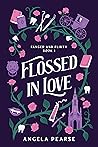
Review: Flossed In Love

Flossed In Love (Fanged and Flirty #1)Flossed In Love by Angela Pearse
My rating: 5 of 5 stars

This is a very fast paced book book that ends on a major cliffhanger, which was perhaps my only complaint. Aside from that, it is very well written.

There is a dual timeline, one which follows the life of Florence in the past and other in the present. The present timeline has two narrators- Damain the Dentist and Floss (as Florence prefers to go as now). 'A dentist with a girlfriend called Floss', the coincidence is not lost to our Dr Rhodes. I found Florence's voice from the past when she was newly turning into a Vampire most interesting. In particular, the chapter where she discovers her flying powers offers a lot of insight into her character. The voices of the past and present are different (the present voice has retained the use of Moi from her past stay in Paris) and the dialogues are well written and show the difference in norms of time as well as growth of Floss' character. The inner monologue still had a 'modern' voice in the 19th century which breaks immersion.

Unlike me - who has only read A Lady of Rooksgrave Manor and A Declaration of the Rights of Magicians if you take a very liberal definition of the genre - Floss’s guilty pleasure is paranormal romance. While I am not deeply familiar with the genre, I did not find the book to have “too much witty banter and not enough blood-sucking.” Instead, these elements felt well balanced and often cleverly intertwined.

That said, given that this is a relatively short, the author could easily have completed the narration rather than ending where she did.

I received an advance review copy for free, and I am leaving this review voluntarily.

View all my reviews

28 December 2025

इज़हार के बाद

 पत्र वत्र लिखने के बाद
प्रेम के शूर से हया के
मोटे पर्दे चीरने के बाद
ये पल हैं अब दया के।

दया करनी है पल पल के बाद
पल पल से भी है वही आस
दया करे वो भी पढ़ने के बाद
उस पल तक तो अटकी रहे सास।

सास फूली गाल लाल, कहने के बाद 
सर चकराए, हाय, जी घबराए 
अंतहीन एक मौन के अंतिम पद के बाद
अब तो बस जी घबराए, मचलाए।

मचलाए क्यों ना हम इन सब के बाद
परीक्षार्थी को ना होती है क्या कुंजी की खोज?
इज़हार ए इश्क़ भी एक इंतहाम है, और उसके बाद
ना सुहाते भाई बंधु, हूरें, निद्रासन या छप्पन भोग।

भोग धूप आरती सब तरह के पूजन के बाद
विनती है कि हे माँ! अब तेरी ही सहारा है 
ये जो तेरी बिटिया है बोल इसके सोचने के बाद
दिल ए आवारा को इसका क्या अब इशारा है।

इशारा समय जो बीत चला नित नित दिन के बाद
करता एक ही ओर, ये नहीं अब केवल नारी  है
बनी है ये मेरी भाग्यस्वामिनी इज़हार के बाद
ये ही अब दारोगा, कलैक्टर और पटवारी है।


27 December 2025

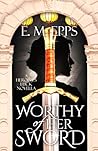
Review: Worthy of Her Sword

Worthy of Her Sword (A Heroine's Luck)Worthy of Her Sword by E. M. Epps
My rating: 3 of 5 stars

This is a adventure/fantasy short story/novella following Tinsa on an undercover mission as a maid so as to earn her role as a 'Heroine' officially which in proper career part with various levels of certifications in the universe. The language is contemporary but still the prose (excepting the dialogues) have a certain charm. That said, dialogue attribution is occasionally unclear, disrupting narrative immersion at key moments. The actual operation, the mental breakdown following the mission as well as the little romantic plot all seemed to be rushed. Perhaps it was a prequel and not reading the earlier parts made it seemed rush, but still the work stands as a standalone. The world building however was interesting enough and enough (deliberate) opaque refrences to House Gaurjo to warrant reading A Winter of Fish and Favor.

This review was in exchange for an ARC.

View all my reviews

23 December 2025

Review: My World Line: An Informal Autobiography

My World Line: An Informal Autobiography My World Line: An Informal Autobiography by George Gamow
My rating: 5 of 5 stars

Unlike Halmos' I Want to be a Mathematician: An Automathography this is not a very detailed memoir or contains tips from the author to a new generation of scholars. In the foreword it is mentioned that the author once considered naming his autobiography "Fragments" and that would have aptly described the book. Still, much like Halmos’ writing, the book is humorous and rich with anecdotes. It reads less like a conventional autobiography and more like a loosely chronological collection of personal stories. In that sense, Gamow comes across almost as a Soviet born Feynman. Indeed this book reminds me of The Pleasure Of Finding Things Out: The Best Short Works Of Richard Feynman. One thing I found rather curious was the lack of any mention of Feynman in the book, given that Gamow pretty much name drops all of the other people on the field. They were even friends and Feynman was a member of his RNA Tie Club too. But still missed. Also unlike Feynman and Halmos, Gamow shies away from actually explaining the science in detail, perhaps trying to keep the bar for audience lower. Also the last four or so decades of the life (in America) are too rushed. They were intended to be outlines but the author passed away before filling those out.

On a side note, it is only by reading lives of people does one fully grasp how close certain historical events were. Born in Odessa (now in Ukraine) the author loved through the Russian revolution, the world wars and the atomic attack on Japan. Since these are just background events in the life of author, the pacing seems to be complete off from mere reading off dates in a history book. It is difficult to imagine the same boy asking for fresh water from British Royal Navy submarines docked in Odessa later asking his British colleagues for help escaping the Iron Curtain. It is even harder to imagine this given the visuals of the current conflict in that region.

It is only a lament that current crop of scientists have stooped writing such autobiographies, which blend personal history, intellectual culture, and humor so effectively.

View all my reviews

20 December 2025

Pythagoras, Baudhayana or Meera Nanda?

 I recently started reading Meera Nanda's Science in Saffron: Skeptical Essays on History of Science. This is about some pseudoscientific claims made routinely by people on the Hindutva side. While our side is indeed suffering from many quacks, something which I myself have noted previously, but still the publisher 'Three essays collective' is a known leftist publisher. Also the book is dedicated to her "comrades". Predictably the preface starts with bashing the Sangh. 

However, while ideologically opposite to us, Nanda is still a scholar. She is not a a humanities type trying to weasel her way into the debates of sciences. She is a PhD in Biotechnology from IITD who have later branched into history of sciences. She is a someone no responsible person should ignore, for निंदक नेड़ा राखिये. Her sharp tounge and witty-to-her comments are more than countered my her scholarship and research. One can disagree with her philosophy that harmonizing science with traditional worldview is not conductive to reasearch (while I agree that radical decolonized relativist "science" say as taught in New Zealand is, but disagree with Nanda on the very thought being wrong), still, her footnotes does not care about our feelings. We can't attack the thesis unless we learn the facts. Perhaps she is not actually anti Hindu and writes against Hindutva side exclusively only for it is now rightfully and joyfully the dominant force politically. Still even in the first 50 or so pages she did give a much softer rapt to African scholars claiming more than their share of mathematical discoveries. This is much relevant when now there have been attempts to portray Yoga as an African practice.

I have read till the end of first chapter only and I did change my views. I read a rejoinder to it ( more accurately a earlier version published as an article) but it is mostly rhetorical and trying to catch her in a gotcha moment when there are none. As facts stand now (or at least in 2016 when the book was written) the first statement as well as proof to what we call the Pythagoras theorem are chinese in origin. Nothing can be done about this fact. It does not make us inferior. She rightly acknowledge that the Suvlasutras tackle a very challenging problem and can be appreciated even if it were not the source of Pythagoras theorem. There is a very nice article in Bhavana (excellent magazine) exploring this. The author however uses the term Baudhāyana-Pythagoras Theorem. To Meera Nanda the mere act of naming is just a childish act of one-upmanship and turing science into a zero sum olympics fought by civilizations. 


A altar that needs to a made with very specific ratios.


Her exposition is very clear, it would be a delight to read a textbook written by her. The citations check out. One has to concede this chapter to Nanda. 

Review: The Housemaid is Watching

The Housemaid is Watching by Freida McFadden My rating: 4 of 5 stars Quite a difference pacing and time ...

Most Read in the Last Month